What Is a Quantity Takeoff in Construction?

kamai.io
May 27, 2026
5 Min
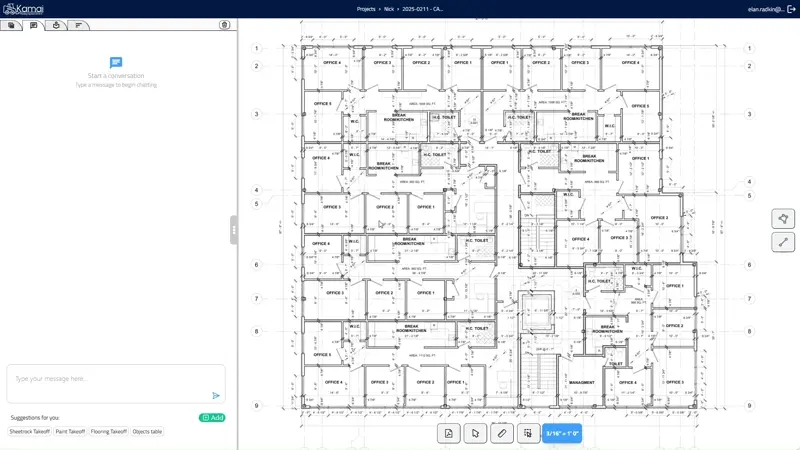
Learn what a quantity takeoff in construction is, why it matters, and how Kamai automates takeoffs from PDF plans using AI-powered blueprint analysis and structured construction data.
In construction, every successful project starts with one important question: How much work is actually required? That question is answered through a quantity takeoff.
A quantity takeoff is the process of measuring and calculating materials, dimensions, and quantities directly from construction drawings. Contractors, estimators, builders, and project managers use quantity takeoffs to understand the full scope of a project before pricing begins. Without accurate quantities, estimates become unreliable, budgets become risky, and material planning becomes difficult.
Whether it is a residential renovation, a commercial office build, or a large industrial project, quantity takeoffs are the foundation of accurate construction estimating.
Modern construction teams are increasingly moving away from manual calculations and adopting digital workflows that transform PDF plans and blueprints into structured data. This is where Kamai helps construction professionals work faster and more accurately by automating takeoffs from drawings and reducing the amount of manual measurement required.
Understanding Quantity Takeoffs in Construction
A quantity takeoff converts information shown on drawings into measurable quantities. Instead of simply looking at a blueprint, the estimator extracts exact values that can later be priced and included in a construction estimate.
The purpose of a quantity takeoff is to determine the amount of material, labor scope, and measurable work required to complete a project.
For example, a quantity takeoff may include:
- Floor areas for tile, carpet, or concrete
- Wall lengths for framing or drywall
- Roof measurements
- Paintable wall and ceiling areas
- Pipe or cable lengths
- Counts of windows, doors, outlets, and fixtures
- Concrete or excavation volumes
- Room perimeters and dimensions
Each trade uses different measurements depending on the project scope. Electrical contractors focus on fixtures, circuits, and conduit lengths. Flooring contractors focus on surface areas. Structural contractors focus on concrete, reinforcement, and framing quantities.
Even though the measurements vary between trades, the overall objective remains the same: transform construction drawings into organized and measurable construction data.
Why Quantity Takeoffs Matter
A construction estimate is only as accurate as the takeoff behind it. If measurements are incorrect, the estimate will also be incorrect.
Small mistakes during takeoff can create significant financial problems later in the project. Missing a room, measuring with the wrong scale, or forgetting a material quantity can lead to:
- Underpriced bids
- Budget overruns
- Material shortages
- Excess material waste
- Delays during construction
- Reduced project profitability
Accurate quantity takeoffs help contractors create more dependable estimates and improve confidence during bidding.
Reliable takeoffs also help construction teams:
- Submit bids faster
- Reduce manual calculation errors
- Compare drawing revisions more easily
- Improve material ordering accuracy
- Maintain consistency across projects
- Create clearer documentation for clients and subcontractors
In competitive construction markets, faster and more accurate estimating can make a major difference when bidding on projects.
Manual Quantity Takeoffs vs Digital Quantity Takeoffs
Traditionally, quantity takeoffs were completed manually using printed plans, rulers, calculators, colored pens, and spreadsheets. Estimators would physically measure drawings and transfer numbers into separate estimating systems.
While this process still exists in some workflows, it can be slow and difficult to maintain when projects become more complex or revisions are introduced.
Manual takeoffs often create challenges such as:
- Repetitive data entry
- Time-consuming calculations
- Difficulty tracking revisions
- Increased risk of human error
- Limited collaboration between teams
Digital takeoff software has changed how construction teams approach estimating.
Instead of measuring from paper plans, estimators can now upload PDF drawings, CAD files, or scanned blueprints directly into digital platforms. Measurements can be completed on screen, quantities stay organized within the project, and revisions become easier to manage.
Kamai takes this process further by using AI-powered blueprint analysis to automate quantity extraction from construction drawings.
How Kamai Modernizes Quantity Takeoffs
Kamai is an AI-powered construction takeoff and blueprint analysis platform designed for contractors, estimators, and construction teams.
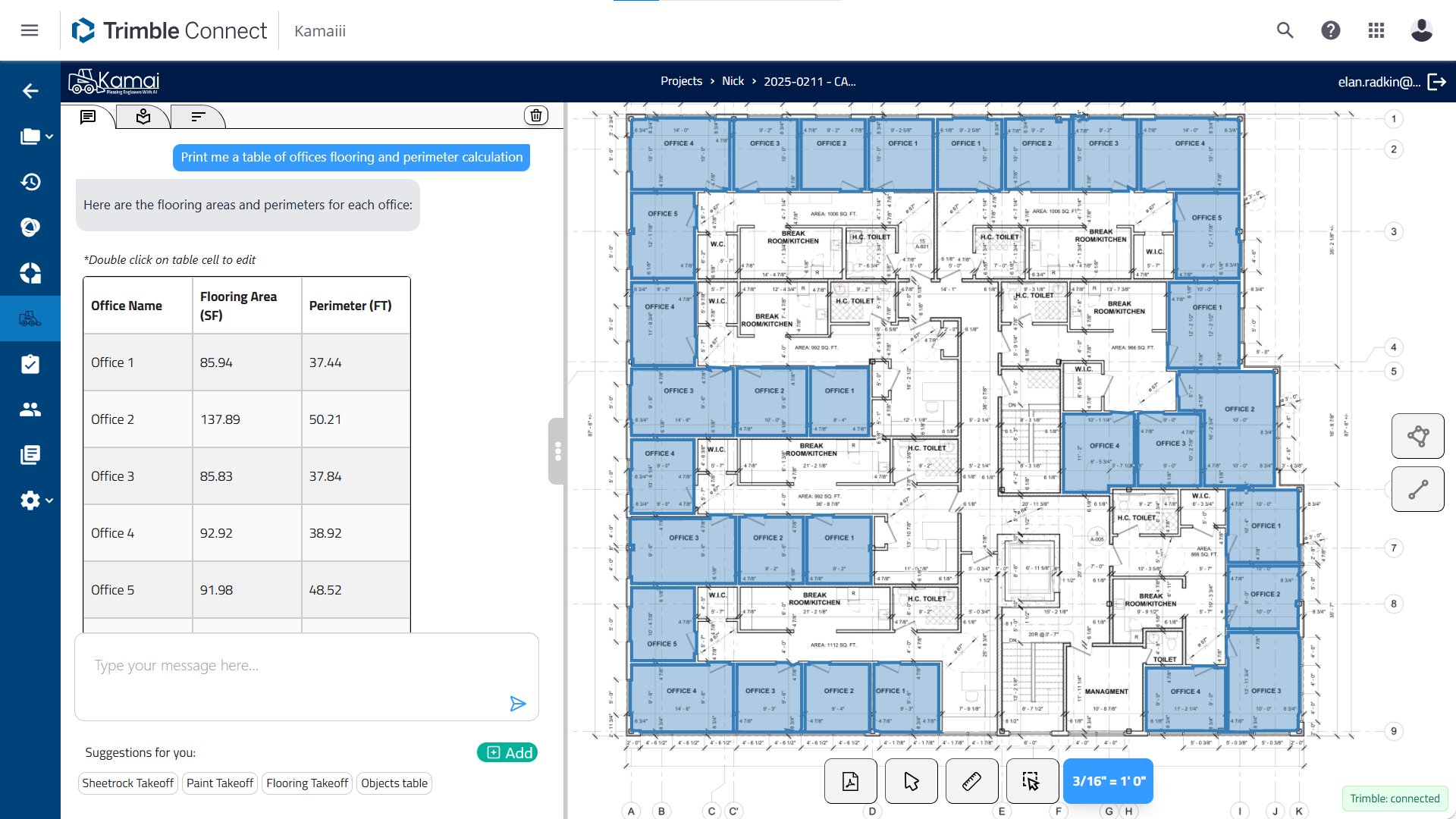
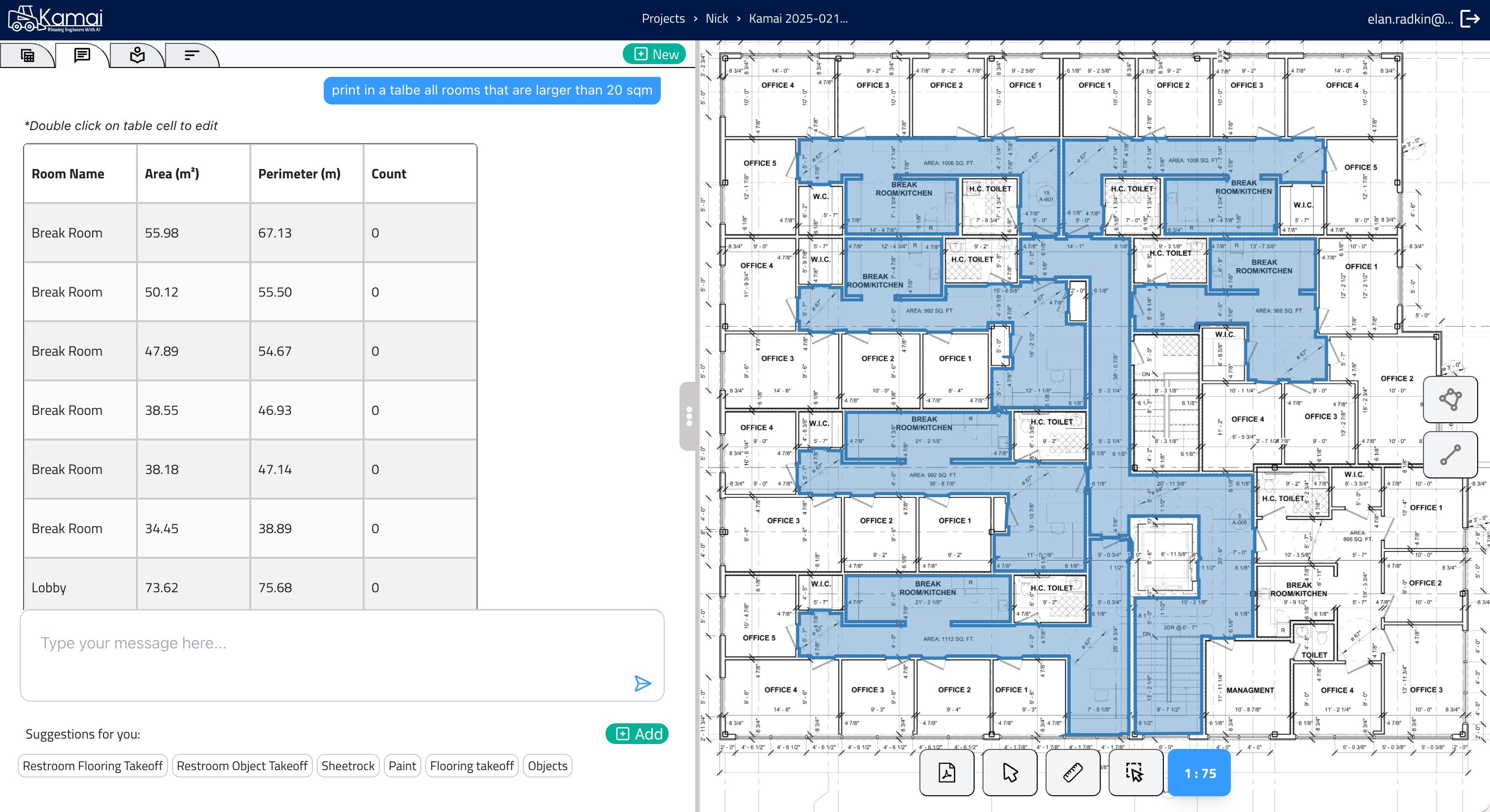
Instead of relying entirely on manual measurements, Kamai analyzes PDF plans and technical drawings using AI and computer vision technology. The platform recognizes construction elements, extracts quantities, and transforms static drawings into structured construction data.
Kamai helps teams:
- Upload PDF plans and blueprints
- Automatically detect rooms and areas
- Extract dimensions and quantities
- Identify construction elements
- Analyze materials and measurements
- Organize structured project data
- Reduce repetitive estimating work
This allows estimators to focus more on reviewing project scope and making decisions rather than spending hours manually tracing measurements.
Turning Drawings into Structured Data
Construction drawings contain enormous amounts of information, but much of it is locked inside lines, symbols, annotations, and schedules.
Kamai transforms these drawings into intelligent and searchable project data.
The platform can identify:
- Rooms and spaces
- Walls and partitions
- Doors and windows
- Fixtures and equipment
- Areas and perimeters
- Material zones
- Measurement dimensions
Rather than manually searching across multiple sheets, estimators can quickly extract organized quantities directly from uploaded plans.
This creates a more efficient workflow for:
- Quantity takeoffs
- Cost estimation
- Bid preparation
- Material planning
- Project review
- Drawing analysis
AI-Assisted Construction Takeoffs
One of the biggest advantages of AI-powered takeoff systems is speed.
Traditional quantity takeoffs can take hours or even days depending on project complexity. Kamai helps reduce that workload by automating large parts of the measuring process.
After uploading plans, Kamai instantly analyzes the drawings and begins identifying measurable construction elements. Estimators can then review, validate, and organize the extracted data.
Kamai’s AI-assisted workflow helps construction teams:
- Skip repetitive manual measurements
- Analyze plans faster
- Improve quantity accuracy
- Reduce estimating bottlenecks
- Handle larger project volumes
- Respond to bid opportunities more quickly
The goal is not to replace estimator expertise. Instead, Kamai acts as an AI co-pilot that speeds up repetitive work while keeping estimators in control of final decisions.
Quantity Takeoff vs Construction Estimate
Many people confuse quantity takeoffs with construction estimates, but they are not the same thing.
A quantity takeoff is the measurement phase. It identifies how much work exists on a project.
A construction estimate applies pricing to those quantities.
.png)
The estimate includes:
- Material costs
- Labor costs
- Equipment costs
- Subcontractor pricing
- Overhead
- Profit margins
- Taxes and contingencies
The takeoff provides the raw quantity data that supports the estimate.
Without an accurate takeoff, the pricing phase becomes unreliable.
Why 2D Drawings Still Matter
Even as BIM and 3D workflows continue to grow, most construction projects still rely heavily on 2D plans and PDF drawings.
Many contractors receive:
- PDF floor plans
- Scanned tender documents
- 2D architectural sheets
- CAD exports
- Revision sets
These documents remain essential during bidding, coordination, validation, and project execution.
Kamai is specifically designed to work with real-world construction documentation, helping teams extract structured data from traditional 2D drawings without requiring a full BIM workflow.
Improving Construction Workflows with Kamai
Construction teams are under constant pressure to deliver faster bids while maintaining accuracy.
Kamai helps improve estimating workflows by combining:
- AI-powered blueprint parsing
- Quantity extraction
- Automated takeoff analysis
- Intelligent object recognition
- Structured construction data
- Cloud-based accessibility
By reducing repetitive manual work, contractors can spend more time reviewing project strategy, evaluating risks, and improving bid quality.
Kamai helps transform blueprint chaos into organized construction intelligence.
The Future of Quantity Takeoffs
Construction estimating is becoming increasingly data-driven. As projects grow more complex, contractors need faster and more reliable ways to extract information from plans.
AI-powered takeoff platforms like Kamai represent the next stage of construction estimating workflows. Instead of manually measuring every line and counting every symbol, estimators can work with intelligent systems that automatically interpret construction drawings and generate structured quantity data.
The future of quantity takeoffs is not just about measuring faster. It is about creating smarter workflows that improve project visibility, reduce errors, and help teams make better decisions earlier in the construction process.
Conclusion
A quantity takeoff is one of the most important steps in construction estimating. It transforms drawings into measurable quantities that support budgeting, bidding, material planning, and project execution.
Traditional manual takeoffs can be slow and error-prone, especially when working with complex drawings and frequent revisions. Modern AI-powered platforms like Kamai help construction teams automate measurements, extract structured data from blueprints, and accelerate the estimating process.
By combining intelligent blueprint analysis with automated quantity extraction, Kamai helps contractors move from static drawings to actionable construction insights faster and with greater confidence.