How Long Does a Construction Takeoff Take?

kamai.io
May 21, 2026
5 Min
Learn how long a construction takeoff takes and how Kamai’s AI-powered PDF takeoff software helps contractors automate measurements, reduce estimating time, and improve bid accuracy.
In construction estimating, speed matters. Contractors often work under tight bidding deadlines, and the ability to complete accurate takeoffs quickly can make the difference between winning a project or missing an opportunity. But one of the most common questions estimators and contractors ask is: how long does a construction takeoff actually take?
The answer depends on several factors, including project complexity, drawing quality, trade scope, and whether the process is manual or digital. A simple residential room may take only minutes to measure, while a large commercial project with hundreds of sheets and multiple disciplines can take days using traditional methods.
With modern AI-powered tools like Kamai, however, construction takeoffs can now be completed dramatically faster without sacrificing accuracy.
The Traditional Construction Takeoff Process
For many years, takeoffs were completed manually using printed plans, scale rulers, calculators, highlighters, and spreadsheets. Estimators would carefully measure wall lengths, floor areas, material quantities, and fixture counts by hand.
While this method still works, it creates several challenges:
- Manual calculations consume hours of labor
- Revisions require rechecking measurements
- Paper workflows increase the risk of missed quantities
- Data must often be re-entered into spreadsheets
- Collaboration between teams becomes slower
On larger projects, manual takeoffs can become extremely time-consuming. Even a small measurement error can affect material costs, labor estimates, and overall profitability.
The biggest issue is not only the measuring itself it is the repeated handling of information throughout the estimating workflow.
How Long Manual Takeoffs Usually Take
The time required for a manual takeoff varies based on project size and complexity.
A small residential renovation with a few pages of drawings might take a few hours to complete manually. A medium-sized commercial fit-out may require an entire day or longer. Large commercial or multi-trade projects can stretch across several days when estimators must measure, organize, verify, and revise quantities manually.
Several factors directly impact takeoff duration:
- Number of drawings and sheets
- Quality and clarity of plans
- Trade discipline involved
- Number of rooms or zones
- Amount of counting required
- Level of detail needed
- Frequency of revisions
- Estimator experience
Poor-quality scanned drawings, missing scales, or overlapping systems can slow the process significantly.
Why Digital Takeoffs Are Much Faster
Digital takeoff software has transformed the estimating process by eliminating many repetitive manual tasks. Instead of printing drawings and measuring by hand, contractors can upload PDF plans directly into a digital platform and measure on-screen.
This reduces time spent on repetitive calculations and improves overall workflow efficiency.
Modern digital takeoff systems allow estimators to:
- Measure directly from PDF drawings
- Calculate areas instantly
- Count objects automatically
- Organize quantities by trade or room
- Export structured takeoff data
- Update quantities quickly when plans change
The result is a much faster and more organized estimating process.
How Kamai Speeds Up Construction Takeoffs
Kamai takes digital estimating even further by combining AI-powered blueprint analysis with automated quantity extraction.
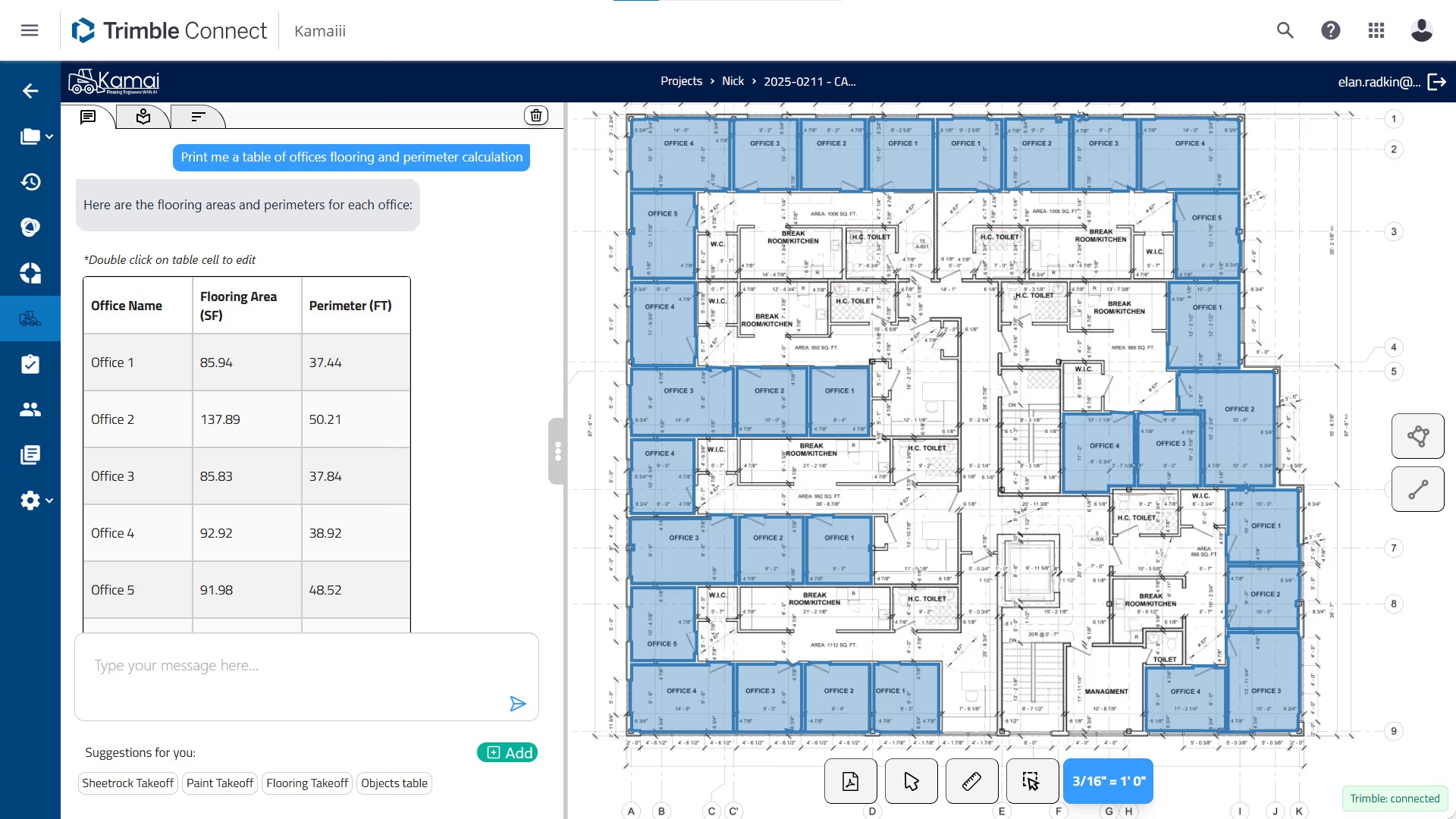
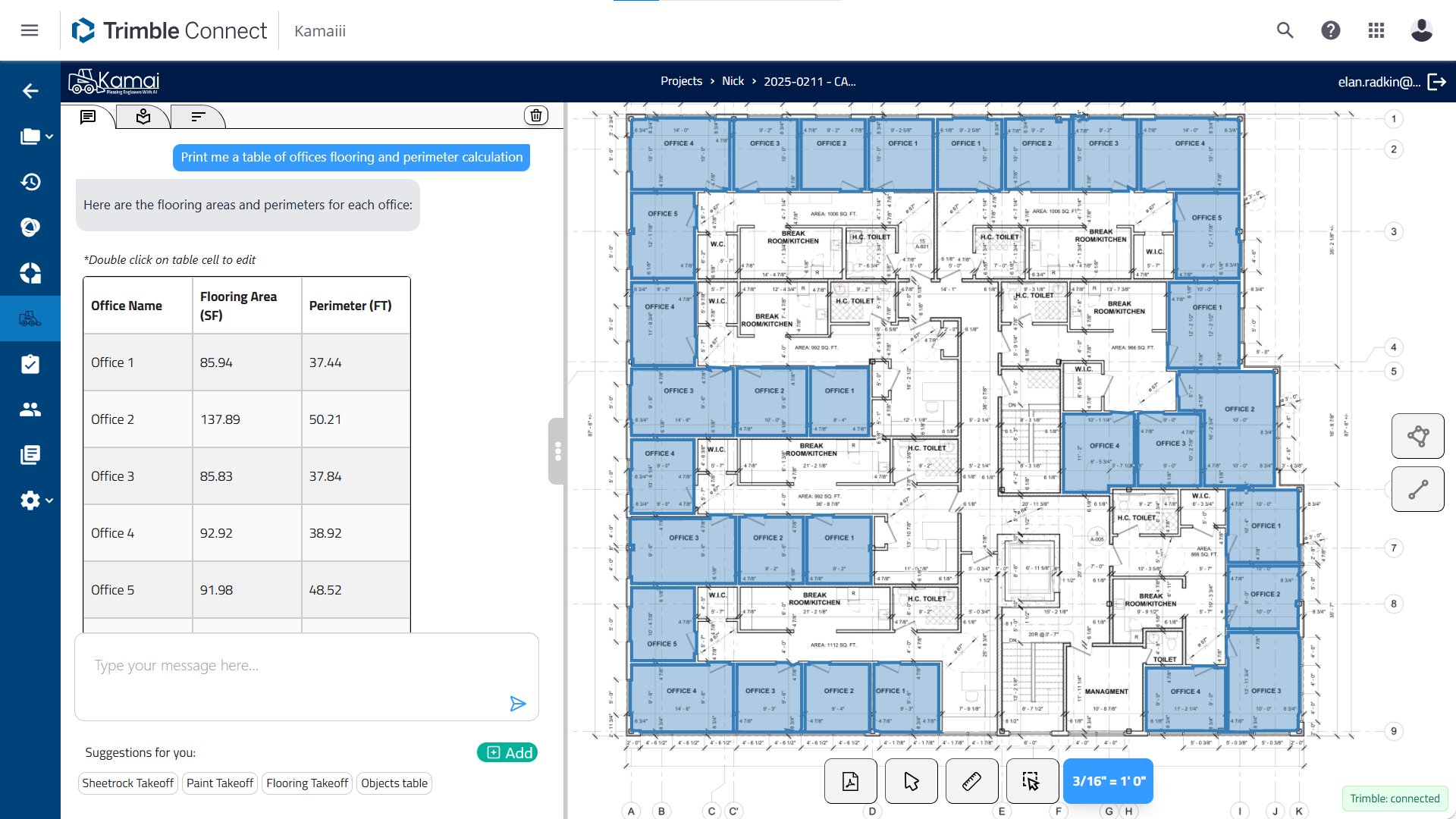
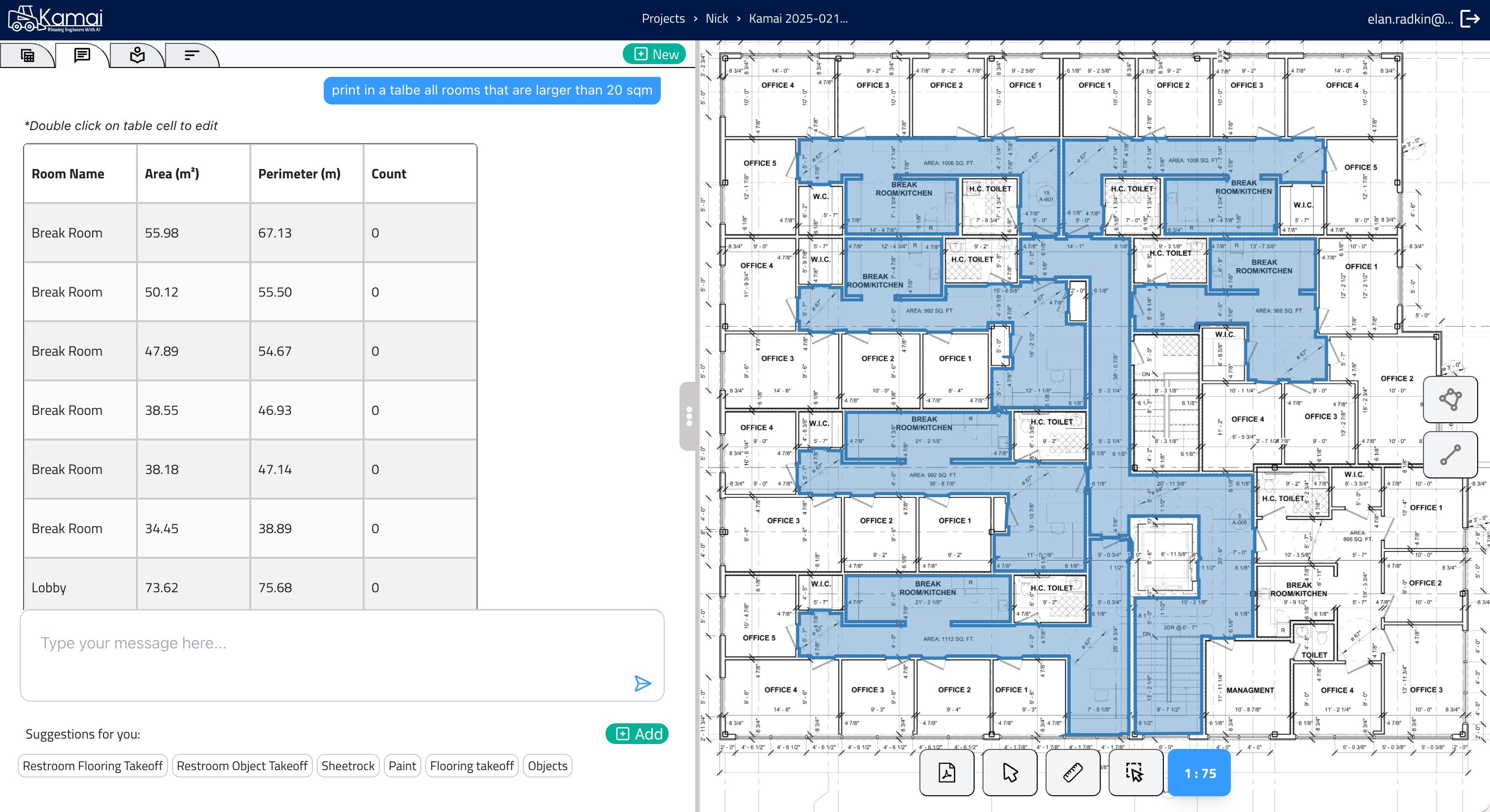
Instead of manually tracing every room or counting every fixture, contractors can upload PDF plans and let Kamai analyze the drawings automatically.
Kamai instantly detects:
- Areas
- Volumes
- Wall dimensions
- Material quantities
- Room layouts
- Construction elements
- Object counts
This dramatically reduces the amount of manual measuring required.
For many residential projects, takeoffs that once took hours can now be reviewed in a fraction of the time. Commercial projects also benefit from faster quantity extraction and improved workflow consistency.
Rather than spending valuable time on repetitive measuring, contractors can focus more on reviewing costs, planning bids, and making strategic decisions.
AI co‑pilot that extracts quantities
One of the biggest time-saving advantages of Kamai is AI co‑pilot that extracts quantities.
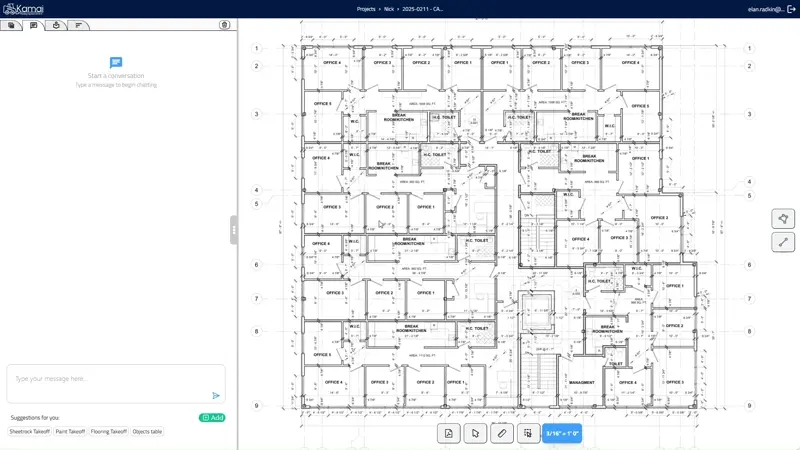
Traditional workflows require estimators to manually trace room boundaries and define measurement zones. Kamai helps automate this process by identifying room-like areas directly from floor plans.
The estimator still reviews and validates the results, but the AI-generated starting point significantly accelerates the workflow.
Kamai also uses intelligent object recognition to help identify and calculate materials from construction drawings. This helps reduce repetitive counting tasks while improving consistency across projects.
What Affects Takeoff Speed the Most?
Even with advanced software, some factors still influence how quickly a construction takeoff can be completed.
Plan Quality: Clear digital drawings with accurate scales are always faster to process than blurry scans or incomplete plans. High-quality PDFs improve both AI recognition and manual review speed.
Project Complexity: Simple residential floor plans naturally take less time than multi-story commercial developments with complex MEP systems and multiple drawing packages.
Scope of Work: A flooring contractor measuring floor areas may complete a takeoff much faster than a full-service estimator reviewing architectural, structural, and MEP quantities simultaneously.
Revisions and Addenda: Frequent plan updates can increase estimating time, especially with manual workflows. Digital systems make revisions easier to manage because quantities remain connected to the project files.
Estimator Experience: Experienced estimators often work faster because they understand how to organize measurements efficiently and spot potential issues quickly.
However, automation tools like Kamai help reduce dependence on repetitive manual processes, allowing both experienced and newer estimators to work more efficiently.
How Contractors Can Make Takeoffs Faster
Improving takeoff speed is not only about software. Workflow organization also plays a major role.
Contractors can improve estimating efficiency by:
- Starting with clean digital plans
- Verifying scales before measuring
- Organizing measurements by trade
- Using consistent naming systems
- Keeping quantities connected to project files
- Reviewing takeoffs before pricing
- Using AI-assisted measurement tools
The goal is not simply to complete takeoffs faster. The goal is to produce accurate, reliable quantities quickly enough to improve bid turnaround without introducing costly mistakes.
Faster Takeoffs Help Contractors Win More Work
One of the biggest benefits of faster construction takeoffs is the ability to bid on more projects.
Manual estimating often limits how many bids a contractor can prepare each week. Long estimating cycles reduce responsiveness and can delay proposal submissions.
By reducing takeoff time, Kamai allows contractors to:
- Respond to bids more quickly
- Handle more estimating volume
- Reduce administrative workload
- Improve estimate consistency
- Increase overall productivity
This creates a major competitive advantage in fast-moving construction markets.
Accuracy Still Matters More Than Speed Alone
While speed is important, accuracy remains critical.
A rushed takeoff filled with quantity errors can create expensive problems during construction. Material shortages, incorrect labor estimates, and missed scope items can quickly erase project profit margins.
That is why Kamai focuses on both automation and structured data accuracy.
The platform combines AI-powered quantity extraction with QA-reviewed workflows designed to improve confidence in the final estimate.
This balance between speed and reliability helps contractors produce estimates they can trust.
The Future of Construction Takeoffs
Construction estimating is moving rapidly toward AI-assisted workflows that reduce manual effort while improving data accuracy.
Instead of relying entirely on spreadsheets and manual measurements, contractors are beginning to adopt intelligent platforms that transform static PDF drawings into structured estimating data.
Kamai represents this next generation of construction takeoff technology.
By automating quantity extraction, analyzing blueprint content, and reducing repetitive measuring tasks, Kamai helps contractors save time while producing more accurate construction estimates.
As bidding deadlines tighten and project complexity increases, faster and smarter takeoff workflows will become essential for construction teams of every size.