What is a Construction Takeoff?

February 20, 2026
Learn what a construction takeoff is and how Kamai automates quantity extraction from drawings to improve accuracy, speed, and construction estimating.
In construction, a takeoff is the process where contractors determine exactly how much of each material is needed to complete a project. This process, also known as a quantity takeoff or material takeoff, involves analyzing blueprints and drawings to calculate the quantities of materials, components, and assemblies required.
A construction takeoff is one of the most important steps in the preconstruction phase because it forms the foundation of accurate estimating, competitive bidding, and efficient project execution. Without a reliable takeoff, contractors risk underestimating costs, overordering materials, or losing bids entirely.
Today, modern AI-powered platforms like Kamai are transforming construction takeoffs by automating quantity extraction and turning drawings into structured, accurate data in minutes.
This guide explains everything you need to know about construction takeoffs, including how they work, why they matter, and how Kamai is revolutionizing the process.
What Is a Takeoff in Construction and Why Is It Important?
A takeoff in construction is the process of measuring and listing all materials required to complete a project. Contractors use takeoffs to determine material quantities, which directly influence project costs, schedules, and profitability.
Construction takeoffs are essential for several key scenarios:
Submitting a Bid
When contractors bid on a project, they must calculate how much material the project requires so they can price it accurately.
Without a takeoff, contractors are forced to rely on rough guesses. This can lead to underbidding, which reduces profit or causes losses, or overbidding, which makes the proposal less competitive.
Kamai helps contractors extract accurate quantities directly from blueprints, ensuring bids are competitive, realistic, and profitable.
Creating an Estimate
Estimates require detailed information about materials, labor, and associated costs. A takeoff provides the material quantities needed to calculate these costs accurately.
Once quantities are known, contractors can apply labor rates, material pricing, taxes, and waste factors to generate a complete estimate.
Kamai automates quantity extraction, allowing estimators to focus on pricing and decision-making instead of manual measurement.
Determining How Much Material to Buy
Even outside the bidding process, takeoffs help contractors purchase the right amount of materials.
Under-buying causes project delays, while over-buying increases costs and reduces profit.
Kamai ensures accurate material planning, helping contractors avoid shortages and waste.
Without a takeoff, material planning becomes guesswork. With Kamai, it becomes data-driven.
Manual vs. Digital Takeoff Methods
Construction takeoffs have evolved significantly over time. Understanding the difference between manual and digital methods highlights why modern tools like Kamai are essential.
Manual Takeoffs
Traditionally, estimators performed takeoffs using printed drawings, rulers, and calculators.
They manually:
- Measured walls and surfaces
- Counted doors and windows
- Calculated areas and volumes
- Entered data into spreadsheets
This process was slow, repetitive, and prone to human error. Manual takeoffs could take hours or days depending on project complexity. Even experienced estimators could miss items or make calculation mistakes.
Digital Takeoffs With Kamai
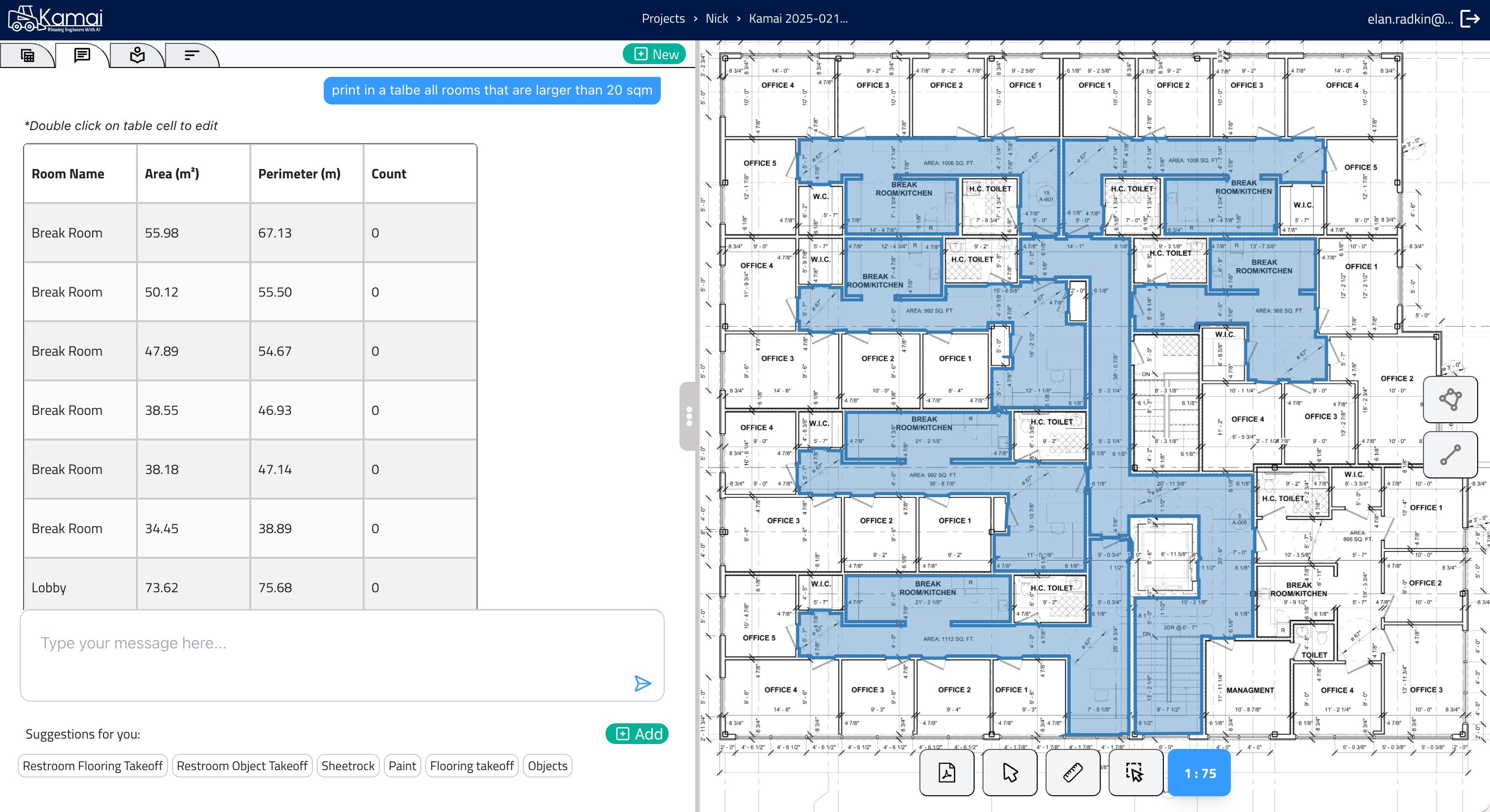
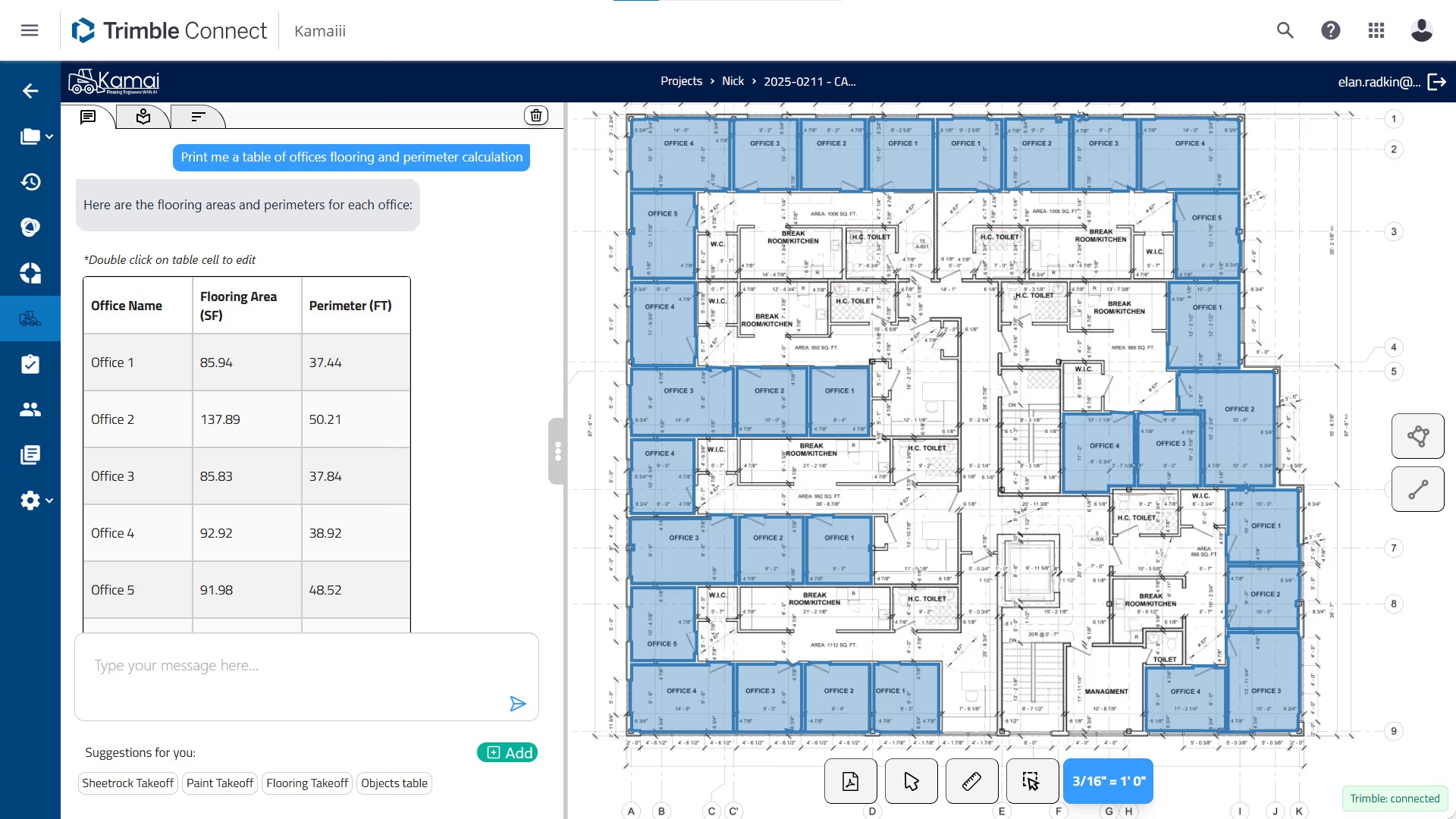
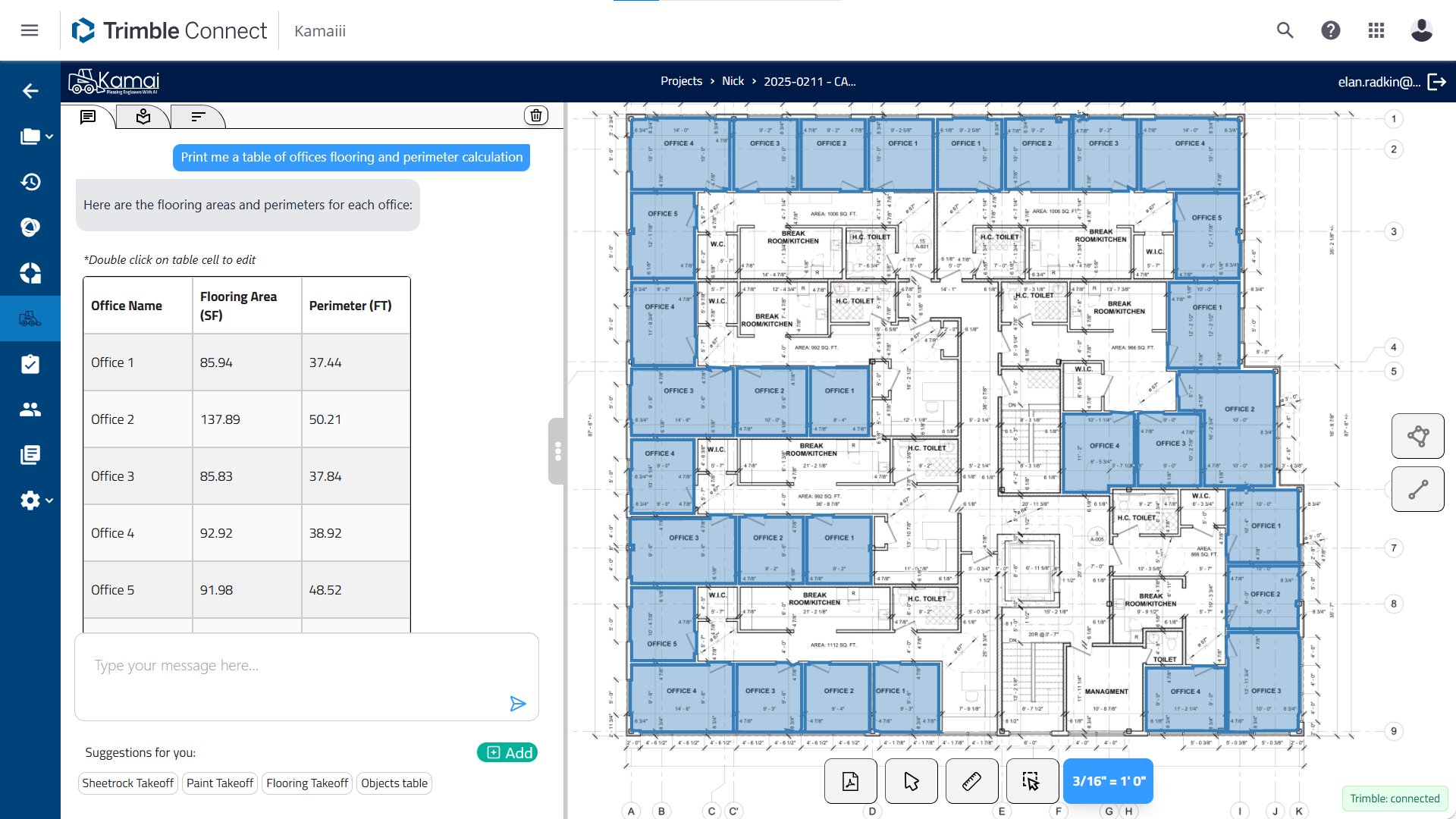
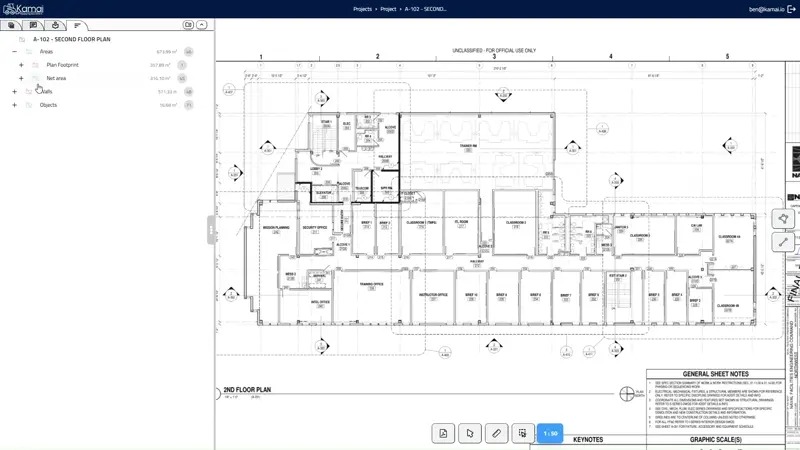
Digital takeoff software automates this process. Kamai uses advanced AI to analyze construction drawings and extract quantities automatically.
Instead of measuring manually, estimators upload plans and receive accurate quantities within minutes.
This approach provides:
- Faster results
- Greater accuracy
- Improved efficiency
- Consistent outputs
Kamai eliminates manual work and transforms takeoffs into a streamlined digital process.
The Takeoff Process Step-by-Step
Understanding how takeoffs work helps explain their importance.
Here is how the process works with modern solutions like Kamai:
Step 1: Upload Construction Drawings
Contractors upload architectural or engineering plans into Kamai.
These drawings typically include:
- Floor plans
- Elevations
- Sections
Kamai supports standard construction PDFs.
Step 2: Analyze Blueprint Data
Kamai’s AI analyzes the drawings and identifies construction elements such as:
- Walls
- Floors
- Doors
- Windows
- Materials
This analysis happens automatically.
Step 3: Calculate Quantities
Kamai calculates quantities such as:
- Surface areas
- Volumes
- Counts
- Material requirements
These quantities are generated with precision.
Step 4: Generate Structured Data
Kamai converts extracted quantities into structured data.
This data can be used for estimating, planning, and reporting.
Step 5: Use Data for Estimating and Planning
Contractors use the takeoff results to:
- Prepare bids
- Create estimates
- Plan procurement
This process ensures accurate project planning.
Who Completes Construction Takeoffs?
Several professionals perform construction takeoffs depending on the organization.
These include:
Estimators
Estimators are primarily responsible for takeoffs. They calculate quantities and prepare cost estimates. Kamai allows estimators to work faster and more accurately.
Contractors
Contractors perform takeoffs to plan projects and purchase materials. Kamai helps contractors reduce risk and improve planning.
Project Managers
Project managers use takeoffs to manage budgets and schedules. Kamai provides reliable data for project planning.
Construction Companies
Entire organizations rely on takeoffs to support bidding and operations. Kamai enables companies to scale their takeoff workflows efficiently.
Benefits of Using Construction Takeoff Software
Modern takeoff software like Kamai provides significant advantages.
Save Time
Manual takeoffs take hours or days. Kamai completes them in minutes. This allows contractors to focus on higher-value work.
Improve Accuracy
Human error is a major risk in manual takeoffs. Kamai ensures consistent, accurate calculations. Accurate takeoffs reduce financial risk.
Increase Productivity
Kamai allows teams to process more projects faster. This improves efficiency and profitability.
Create Better Bids
Accurate quantities lead to competitive bids. Kamai helps contractors win more projects.
Improve Collaboration
Kamai provides shared access to data. Teams work from the same information. This improves communication.
Challenges and Solutions in Construction Takeoff
Construction takeoffs present several challenges. Kamai provides solutions to these challenges.
Challenge: Human Error
Manual calculations introduce mistakes.
Solution: Kamai automates calculations to ensure accuracy.
Challenge: Time Constraints
Manual takeoffs take too long.
Solution: Kamai delivers results instantly.
Challenge: Project Complexity
Large projects are difficult to measure manually.
Solution: Kamai handles complex drawings easily.
Challenge: Inconsistent Results
Different estimators produce different results.
Solution: Kamai provides consistent, standardized outputs.
How Kamai Is Revolutionizing Preconstruction Workflow
Kamai is transforming preconstruction workflows with AI-powered automation.
Instead of spending hours measuring drawings, contractors upload plans and receive accurate data instantly.
Kamai enables:
- Automated quantity extraction
- Structured data generation
- Faster estimating
- Improved decision-making
Kamai acts as an AI co-pilot for construction teams. It eliminates manual work and improves efficiency. Kamai allows teams to focus on strategy instead of measurement.
Accurate Takeoffs Are the Key to Efficient Projects
Accurate takeoffs are essential for project success.
They affect:
- Project costs
- Material planning
- Scheduling
- Profitability
Inaccurate takeoffs lead to:
- Cost overruns
- Delays
- Lost profits
Kamai ensures accuracy and reliability. This improves project outcomes. Accurate takeoffs create efficient projects. Kamai makes accurate takeoffs easy.
Frequently Asked Questions
What is a construction takeoff?
A construction takeoff calculates material quantities needed for a project.
Kamai automates this process using AI.
Why is a takeoff important?
Takeoffs ensure accurate estimates and bids.
Kamai improves accuracy and speed.
Who performs takeoffs?
Estimators, contractors, and project managers perform takeoffs.
Kamai supports all construction professionals.
How long does a takeoff take?
Manual takeoffs take hours or days.
Kamai completes takeoffs in minutes.
Why use Kamai for construction takeoffs?
Kamai provides accurate, automated takeoffs.
It saves time and improves project planning.
Conclusion
Construction takeoffs are a critical part of the construction process. They determine material quantities, support estimating, and enable accurate project planning.
Manual takeoffs are slow and error-prone. Modern construction demands faster and more reliable solutions.
Kamai provides AI-powered construction takeoff software that transforms drawings into accurate quantities instantly.
By automating takeoffs, Kamai helps contractors save time, reduce risk, and win more projects.
Kamai represents the future of construction takeoffs.