The Rising Cost of Inaccurate Construction Estimates

April 6, 2026
Discover the rising cost of inaccurate construction estimates and how Kamai helps reduce errors, improve accuracy, and boost profitability with AI-powered takeoff.
In today’s construction landscape, profitability is under constant pressure. Market uncertainty, rising material costs, and ongoing labor shortages are tightening margins across the industry. In this environment, the difference between success and failure often comes down to one critical factor: how accurately you estimate project costs before work begins.
Accurate estimating is no longer just a best practice it’s a necessity for survival. Yet many construction companies still rely on manual processes that are time-consuming, inconsistent, and prone to error.
This is where the true cost of inaccurate construction estimates begins to reveal itself not just in lost profits, but in delays, inefficiencies, and damaged reputations. With modern solutions like Kamai, companies now have the opportunity to transform estimating from a risk into a strategic advantage.
Why Accurate Estimating Is More Critical Than Ever
Construction projects operate on thin margins. Even small miscalculations can have a major impact on profitability.
When estimates are accurate, projects run smoothly, budgets stay under control, and timelines are met. But when estimates are wrong, the consequences can quickly spiral out of control.
In today’s volatile market, where material prices fluctuate and labor availability is unpredictable, relying on outdated or manual estimating methods creates unnecessary risk.
Accurate estimating provides the foundation for everything that follows from procurement and scheduling to execution and delivery.
The Ripple Effect of Estimating Errors
An inaccurate estimate doesn’t just affect the initial bid it triggers a chain reaction throughout the entire project lifecycle.
When material quantities are underestimated, teams may run out of supplies mid-project. This leads to rushed orders, often at higher prices, increasing overall costs.
When labor is miscalculated, schedules begin to slip. Crews may need to work longer hours or additional teams may be required, driving up labor expenses.
Project managers are then forced to shift their focus from optimizing workflows to troubleshooting issues. This reactive approach reduces efficiency and increases stress across the team.
Over time, these issues compound, turning what seemed like a small error into a significant financial loss.
The Hidden Cost: Reputation and Client Trust
While financial losses are immediate and measurable, the long-term impact of inaccurate estimates is often even more damaging.
When projects consistently exceed budgets or miss deadlines, clients begin to lose confidence. Trust is one of the most valuable assets in construction, and once it’s lost, it can be difficult to rebuild.
Missed expectations can lead to fewer repeat clients, negative referrals, and a shrinking pipeline of future work.
In a competitive industry, reputation can determine whether a company grows or struggles to survive.
Common Pitfalls in the Estimating Process
To address the problem of inaccurate estimates, it’s important to understand where things typically go wrong.
Manual Takeoffs and Data Entry
Many construction teams still rely on manual takeoffs using paper plans or spreadsheets.
This process is not only slow but also highly prone to human error. Even experienced estimators can make mistakes when calculating quantities or entering data.
A single misplaced decimal point or incorrect formula can have a significant impact on the final estimate.
Outdated or Generalized Cost Data
Material prices can change rapidly, especially in uncertain markets.
Using outdated cost data can result in estimates that no longer reflect current conditions. This creates a gap between projected and actual costs.
Accurate estimating requires access to real-time pricing and the ability to adjust for regional and project-specific variations.
Overlooking Project Complexity
Every construction project has unique challenges.
Factors such as site conditions, building design, and logistical constraints can significantly impact costs.
When estimators rely on standardized assumptions without accounting for these variables, the resulting estimates may be unrealistic.
Communication Gaps Between Teams
Estimating does not happen in isolation.
When there is a disconnect between estimating, project management, and field teams, it can lead to misalignment and poor execution.
If field teams interpret plans differently than estimators, it can result in cost overruns and inefficiencies.
Inadequate Risk Assessment
Construction projects inherently involve risk.
Weather delays, supply chain disruptions, and permitting issues can all impact costs.
When estimates fail to include appropriate contingencies, even minor disruptions can push projects over budget.
The Digital Transformation of Construction Estimating
The good news is that technology is transforming how construction estimates are created and managed.
Digital tools are reducing errors, improving efficiency, and enabling more accurate decision-making.
From Manual Takeoffs to Automated Solutions
Digital takeoff tools allow estimators to work directly from digital plans, improving accuracy and consistency.
These tools track measurements automatically, reducing the risk of missed items and creating a clear record of assumptions.
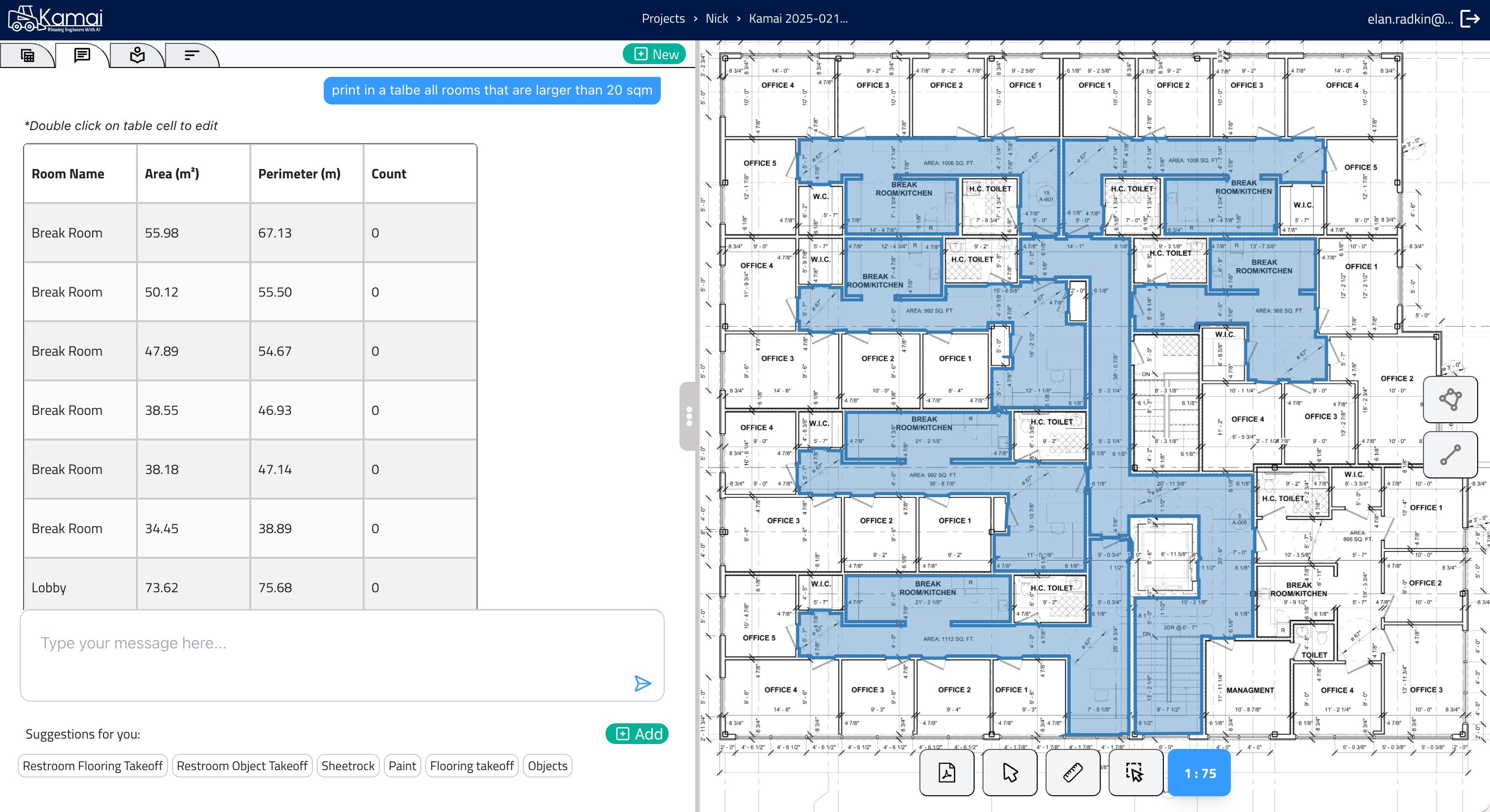
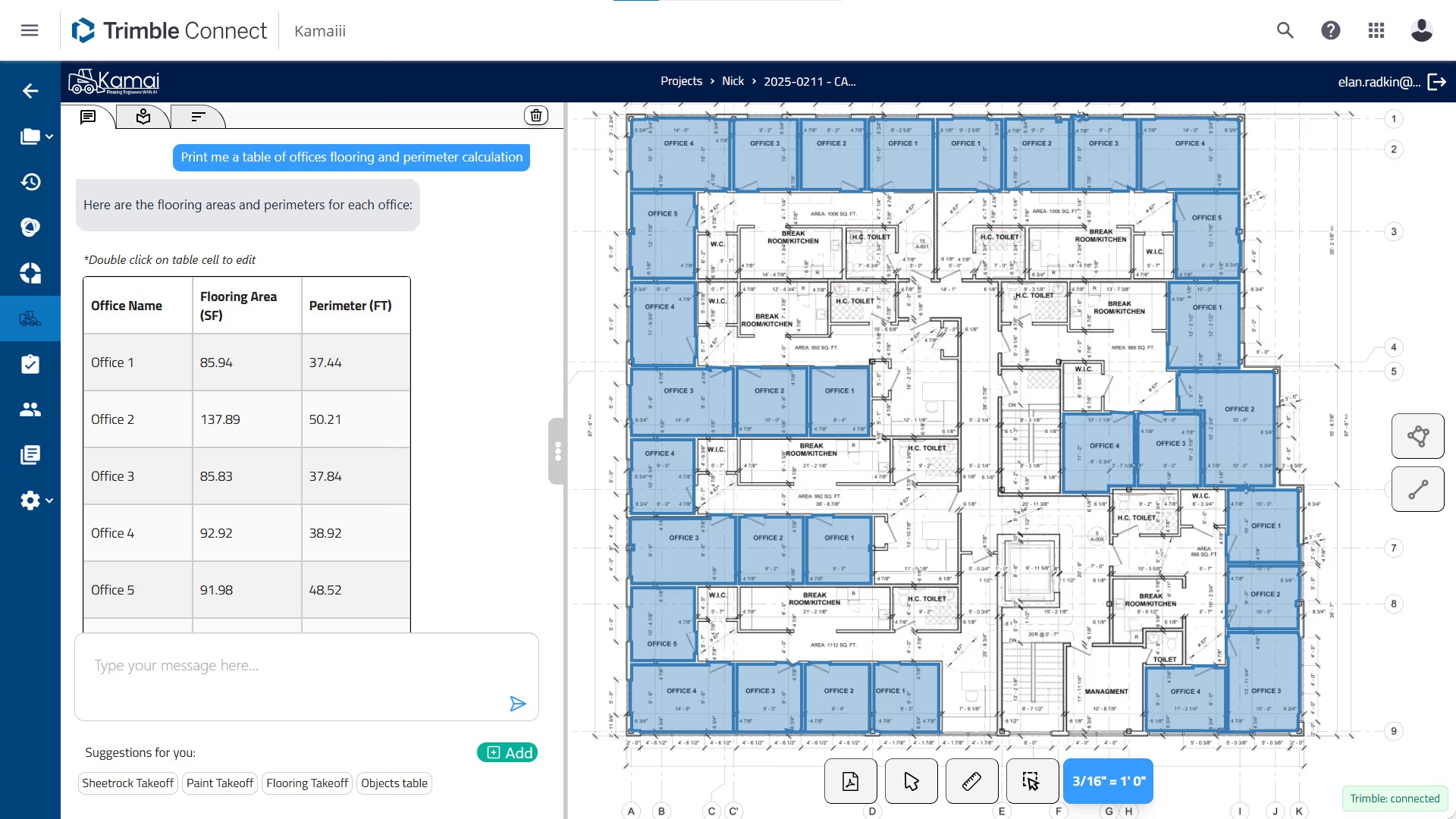
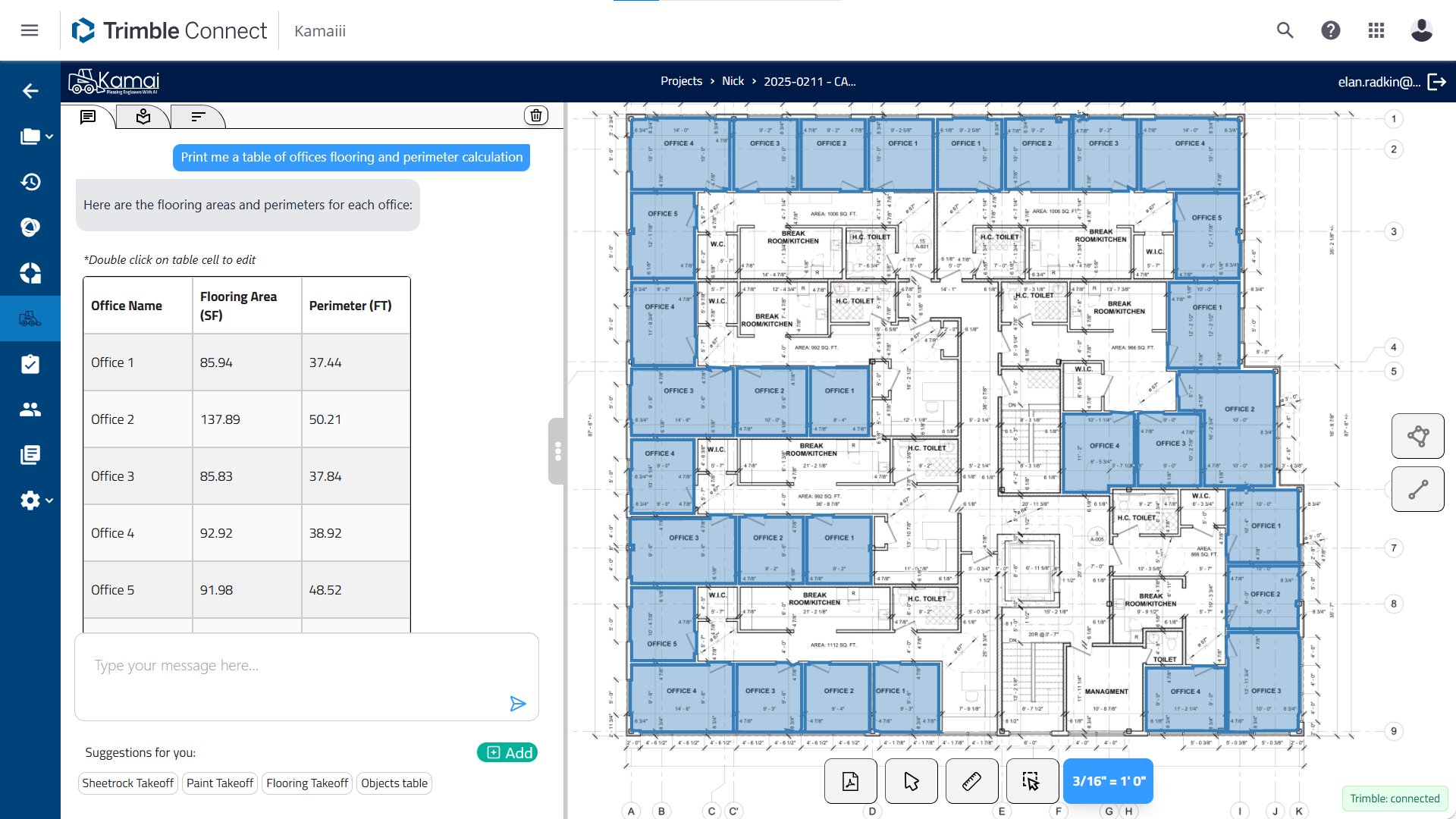
Kamai takes this a step further by automating the entire takeoff process.
Instead of manually measuring drawings, users can upload blueprints and let Kamai extract quantities with precision.
The Role of AI in Estimating
Artificial intelligence is revolutionizing construction estimating.
AI-powered systems can analyze complex drawings, identify elements, and calculate quantities in seconds.
Kamai uses advanced AI to detect areas, volumes, and materials directly from blueprints. This eliminates manual effort and significantly reduces the risk of error.
By transforming drawings into structured data, Kamai enables faster and more reliable estimates.
Real-Time Cost Data and Insights
Modern estimating tools integrate real-time cost data, ensuring that estimates reflect current market conditions.
This allows teams to make more informed decisions and avoid surprises during project execution.
Additionally, data analytics enable companies to compare past estimates with actual outcomes, helping them continuously improve accuracy.
A Smarter Approach to Estimating with Kamai
Improving estimating accuracy requires more than just better tools—it requires a smarter approach.
Kamai supports this transformation by combining automation, AI, and data-driven insights.
Skip Measurements
Manual measurement is one of the most time-consuming aspects of estimating.
Kamai eliminates this step by automatically extracting dimensions and quantities from blueprints.
This not only saves time but also ensures consistency and accuracy.
Analyze Instantly
Speed is critical in competitive bidding environments.
Kamai allows users to upload drawings and receive insights almost instantly.
Its AI identifies elements, quantities, and materials in seconds, enabling faster analysis and decision-making.
Make Better Decisions
Accurate data leads to better decisions.
Kamai transforms blueprint information into actionable insights, allowing teams to compare options, estimate costs, and plan projects with confidence.
By focusing on analysis rather than data collection, estimators can create more competitive and reliable bids.
Building a More Resilient Estimating Process
Technology is only part of the solution.
Construction companies must also refine their processes to improve estimating accuracy.
Standardizing workflows, maintaining historical cost databases, and encouraging collaboration between departments can all contribute to better outcomes.
Training and development are also essential. Equipping teams with the skills and tools they need ensures that technology is used effectively.
When combined with advanced solutions like Kamai, these strategies create a more resilient and efficient estimating process.
Conclusion
The cost of inaccurate construction estimates goes far beyond simple miscalculations.
It impacts profitability, delays projects, strains teams, and damages client relationships.
In an industry where margins are tight and competition is fierce, accurate estimating is essential for long-term success.
By adopting modern tools and smarter workflows, construction companies can reduce errors, improve efficiency, and build stronger relationships with clients.
Kamai plays a key role in this transformation, helping teams turn blueprint data into accurate, actionable insights.
In the end, investing in better estimating isn’t just about avoiding losses it’s about creating a foundation for sustainable growth and success.