Takeoff from Drawings: Turning PDF Plans into Accurate Structured Data

kamai.io
May 2, 2026
6 Min
%20(1080p)_153.jpg)
Discover how Kamai automates takeoff from drawings by turning PDF plans into accurate structured data for faster estimates, smarter bids, and better construction decisions.
In construction, accurate numbers drive profitable decisions. Before procurement begins, before labour is scheduled, and before a bid is submitted, one important process determines how reliable the project budget will be: takeoff from drawings. This is the stage where estimators review plans and convert design information into measurable quantities such as lengths, areas, counts, and volumes.
For decades, this process depended on manual effort. Teams used printed blueprints, scale rulers, calculators, coloured markers, and spreadsheets to interpret plans sheet by sheet. While experienced estimators could produce strong results, the process was slow, repetitive, and vulnerable to human error. As projects became more complex and deadlines tighter, traditional takeoff methods started to create serious bottlenecks.
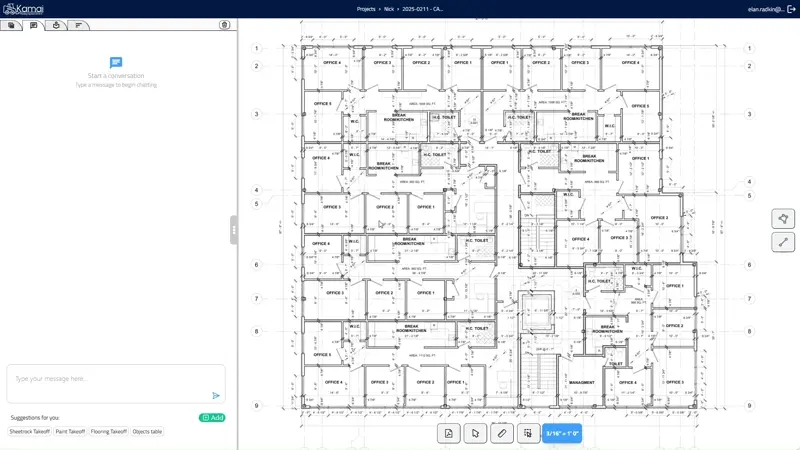
Today, the industry is moving toward a faster and more intelligent approach. Kamai helps construction teams transform PDF plans into accurate structured data using AI-powered takeoff technology. Instead of spending hours measuring drawings manually, estimators can upload plans and receive organized quantities ready for estimating, planning, and decision-making.
This shift is changing how modern contractors compete, scale, and protect profit margins.
Why Takeoff from Drawings Is So Important
Every construction drawing contains valuable information. Architectural plans show layouts, room dimensions, doors, finishes, and wall types. Structural plans define slabs, columns, beams, reinforcement zones, and foundations. Mechanical, electrical, and plumbing drawings contain fixtures, ducting, piping, outlets, and equipment locations.
However, drawings alone do not create an estimate. They must first be translated into numbers.
Takeoff from drawings bridges the gap between design intent and construction cost. It converts visual information into usable quantities that estimators rely on to build accurate pricing models.
These quantities often include:
- Flooring areas
- Ceiling areas
- Wall lengths
- Paintable wall surfaces
- Concrete volumes
- Steel counts
- Door and window quantities
- Fixture totals
- Pipe runs
- Duct lengths
- Room-by-room measurements
- Trade-specific material totals
Without an accurate takeoff, the estimate becomes guesswork. A missed area, duplicate count, or incorrect scale can significantly affect pricing. On projects with thin margins, even a small mistake can erase profit.
That is why reliable takeoff data is one of the most important foundations of successful construction estimating.
The Problems with Manual Takeoff Workflows
Although many companies have adopted digital tools, a large number of estimators still follow workflows built around manual effort. They may use PDFs instead of paper drawings, but the actual process often remains the same: zoom in, measure lines, count symbols, enter values into spreadsheets, repeat across dozens or hundreds of sheets.
This creates several common problems.
First, it consumes time. Large projects can include extensive drawing packages across multiple disciplines and revisions. Manual review of these sets can take many hours or several days.
Second, it introduces inconsistency. Two estimators may interpret the same drawing differently or measure scope using different methods.
Third, it increases the risk of missing scope. In fast-moving bid environments, overlooked quantities are common when teams rush.
Fourth, revisions become painful. If updated plans arrive close to the deadline, estimators may need to redo sections of the takeoff manually.
Finally, manual workflows limit growth. If every estimate depends on many labour hours, scaling bid volume requires adding more staff.
These challenges explain why many contractors are searching for smarter alternatives.
Turning PDF Plans into Structured Data with Kamai
Kamai was built to solve the gap between static drawings and actionable construction data. Instead of treating plans as files to be manually reviewed, Kamai uses advanced AI and computer vision to interpret plan content and extract quantities automatically.
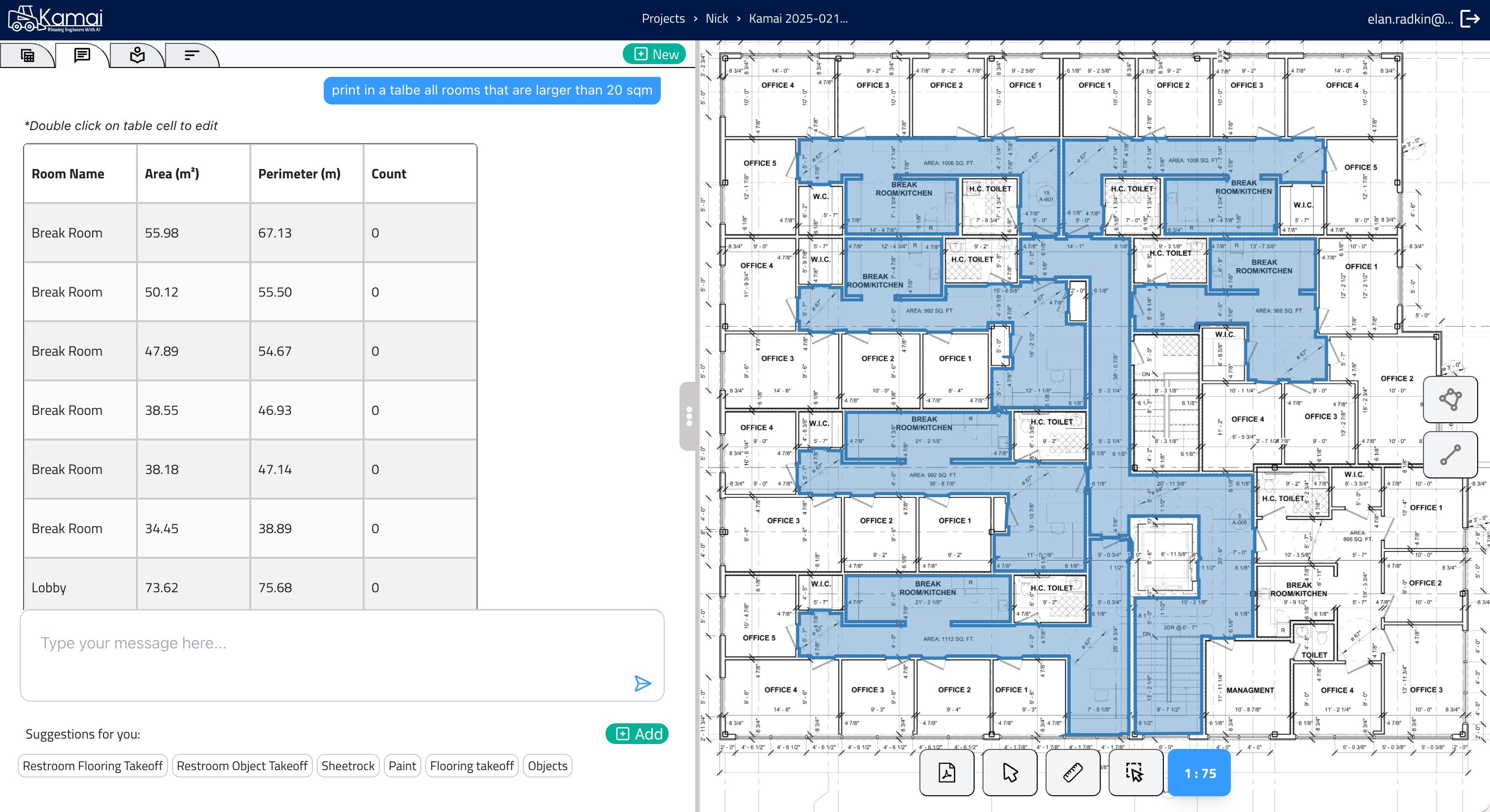
Users upload PDF plans or blueprint packages, and the platform begins analyzing the drawings immediately. Rather than only reading text labels, the system evaluates geometry, symbols, boundaries, and layout relationships to identify measurable elements.
That means Kamai can detect the information estimators usually spend hours extracting manually.
The result is structured output that can be used directly for estimating and planning.
This may include:
- Area calculations by room or zone
- Linear measurements for walls or perimeter items
- Quantity counts for fixtures and openings
- Surface areas for finishes
- Volume calculations for structural scope
- Project summaries across multiple sheets
- Trade-specific data exports
Instead of raw drawings, teams receive organized information ready for action.
Why Structured Data Matters
Many businesses underestimate the value of structured data. It is not only about saving time on measurements. It is about making information easier to use across the company.
When quantities are organized clearly, teams can move faster in every stage of preconstruction and project delivery.
Estimators can build pricing models faster. Procurement teams can review material demand earlier. Project managers can understand scope more clearly. Leadership can compare project opportunities with better visibility.
Structured data also supports consistency. Instead of every estimator building takeoffs differently, outputs follow repeatable logic that can be reviewed and improved over time.
This is especially valuable for growing contractors that need scalable systems.
Faster Estimates Without Sacrificing Accuracy
Speed matters in construction bidding. Opportunities often come with short submission deadlines. If a team cannot complete takeoffs quickly, they may rush the estimate or skip bidding entirely.
Kamai helps teams accelerate turnaround while maintaining quality.
Instead of spending valuable time tracing drawings and checking formulas, estimators can focus on strategic work such as:
- Reviewing scope risks
- Refining labour assumptions
- Comparing subcontractor quotes
- Adjusting pricing strategy
- Value engineering options
- Final bid review
This creates a major competitive advantage. Faster takeoffs mean more time for better estimating decisions.
It can also increase bid volume. When the same team can complete more estimates each month, growth becomes possible without immediately increasing headcount.
Better Control When Drawings Change
Revisions are normal in construction. Tender packages are updated, addenda are issued, design details change, and late clarifications appear before submission deadlines.
In manual workflows, these changes often trigger frustration. Teams must compare sheets manually, identify differences, and redo affected measurements.
With an automated system, updated plans can be processed faster and more consistently. This reduces the cost of change and lowers the chance of missing revised scope.
For contractors working in competitive tender environments, that responsiveness is extremely valuable.
Supporting Residential, Commercial, and Complex Projects
Takeoff from drawings is needed across nearly every construction sector. Kamai can support workflows for projects such as:
- Residential housing developments
- Apartment buildings
- Office fit-outs
- Warehouses
- Schools and universities
- Hotels
- Retail spaces
- Hospitals and healthcare projects
- Industrial facilities
- Mixed-use developments
- Renovations and extensions
Whether the project is a straightforward house plan or a large multi-sheet commercial package, the need remains the same: convert drawings into trustworthy quantities.
From Estimators to Decision Makers
Modern estimating is evolving. The estimator’s role is no longer only about measuring and counting. Increasingly, businesses need estimators to act as commercial decision makers who understand cost risk, bid strategy, market pricing, and profitability.
That shift is difficult when skilled people spend most of their time on repetitive takeoff tasks.
Kamai helps free estimating teams from low-value manual work so they can focus on high-value decisions. This improves both employee productivity and business outcomes.
Instead of being trapped in spreadsheets, teams can concentrate on winning the right projects at the right margins.
Why PDF Plans Still Matter
Even with BIM adoption growing, most construction companies still receive work packages in PDF or 2D drawing formats. Tender documents, consultant drawings, scanned legacy plans, and design revisions frequently arrive as static files.
That means the challenge of extracting information from 2D plans remains highly relevant.
Kamai addresses today’s reality rather than waiting for every project to become fully model-based. It upgrades the workflows companies already use by turning familiar plan files into intelligent data.
Final Thoughts
Takeoff from drawings will always be a core part of construction estimating. The difference today is that it no longer needs to be slow, repetitive, or error-prone.
Kamai transforms PDF plans into accurate structured data so contractors can estimate faster, bid smarter, and plan with confidence. Instead of losing time to manual measurements, teams gain instant visibility into quantities, scope, and cost drivers.
As margins tighten and competition increases, the businesses that win will be the ones that turn information into action fastest.
With Kamai, your drawings become more than documents. They become a source of speed, clarity, and profitable decisions.