How to Overcome Manual Estimation Challenges with a PDF Takeoff API

kamai.io
May 18, 2026
6 Min
Learn how to overcome manual estimation challenges with a PDF Takeoff API. Discover how Kamai automates quantity extraction from PDF plans for faster, more accurate construction estimating workflows.
Construction estimating has always depended on one critical factor: accurate quantity takeoffs. Before a contractor can prepare a reliable bid, teams must carefully review plans, measure project components, calculate material quantities, and translate drawings into real construction costs.
For decades, this process was handled manually using printed blueprints, rulers, spreadsheets, and handwritten calculations. While experienced estimators became highly skilled at this work, manual estimation still creates significant challenges that affect speed, consistency, and profitability.
Today, PDF Takeoff APIs are helping construction companies overcome these limitations by automating quantity extraction directly from digital plans. Instead of manually measuring every wall, fixture, or room, estimators can now turn PDF drawings into structured construction data within minutes.
As projects become more complex and bidding timelines continue shrinking, automated takeoff technology is becoming essential for modern construction workflows.
The Problem with Manual Construction Estimating
Manual estimating is time-consuming by nature. Estimators often spend countless hours reviewing architectural, structural, and MEP plans to identify measurements and quantities. On large projects, this can involve hundreds of sheets and thousands of construction elements.
Even highly experienced professionals can encounter issues during manual takeoffs, including:
- Missed quantities
- Incorrect measurements
- Spreadsheet errors
- Duplicate counts
- Inconsistent workflows
- Version confusion
These small mistakes can create serious downstream problems. An inaccurate estimate may lead to material shortages, project delays, procurement issues, budget overruns, or reduced profit margins.
The challenge becomes even greater when teams are under pressure to submit bids quickly. Speed and accuracy are both critical, yet manual workflows often force companies to compromise between the two.
Why PDF Plans Create Additional Estimating Challenges
Most construction projects still rely heavily on 2D PDF drawings during the bidding and preconstruction stages. Even companies working with BIM models often begin with static tender documents and plan sets.
While PDFs are universal and easy to distribute, they also introduce several common estimating difficulties.
Low-Resolution Files
Not all PDF drawings are clean and high quality. Some plans are scanned copies with faded text, distorted lines, or unclear symbols. Poor image quality can make manual measurement difficult and increase the likelihood of errors.
When estimators must zoom repeatedly or interpret unclear details manually, productivity slows significantly.
Missing or Unlabeled Scales
Some construction drawings arrive without clear scale references or contain inconsistent scaling between sheets. Manual estimators must spend additional time calibrating dimensions carefully before measurements can begin.
Even a small scaling mistake can impact every quantity calculation throughout the estimate.
Multiple Drawing Versions
Construction drawings change frequently throughout the bidding process. Addenda, revisions, and updated plan sets can create confusion about which version is the latest approved document.
When teams accidentally estimate from outdated drawings, the results can be extremely costly.
Complex Layering Between Disciplines
Modern construction plans contain overlapping architectural, structural, and MEP information. Mechanical, electrical, and plumbing systems often intersect with walls, ceilings, and structural components, making manual interpretation difficult.
Estimators must constantly cross-reference sheets and disciplines to avoid missing important scope items.
How PDF Takeoff APIs Solve These Problems
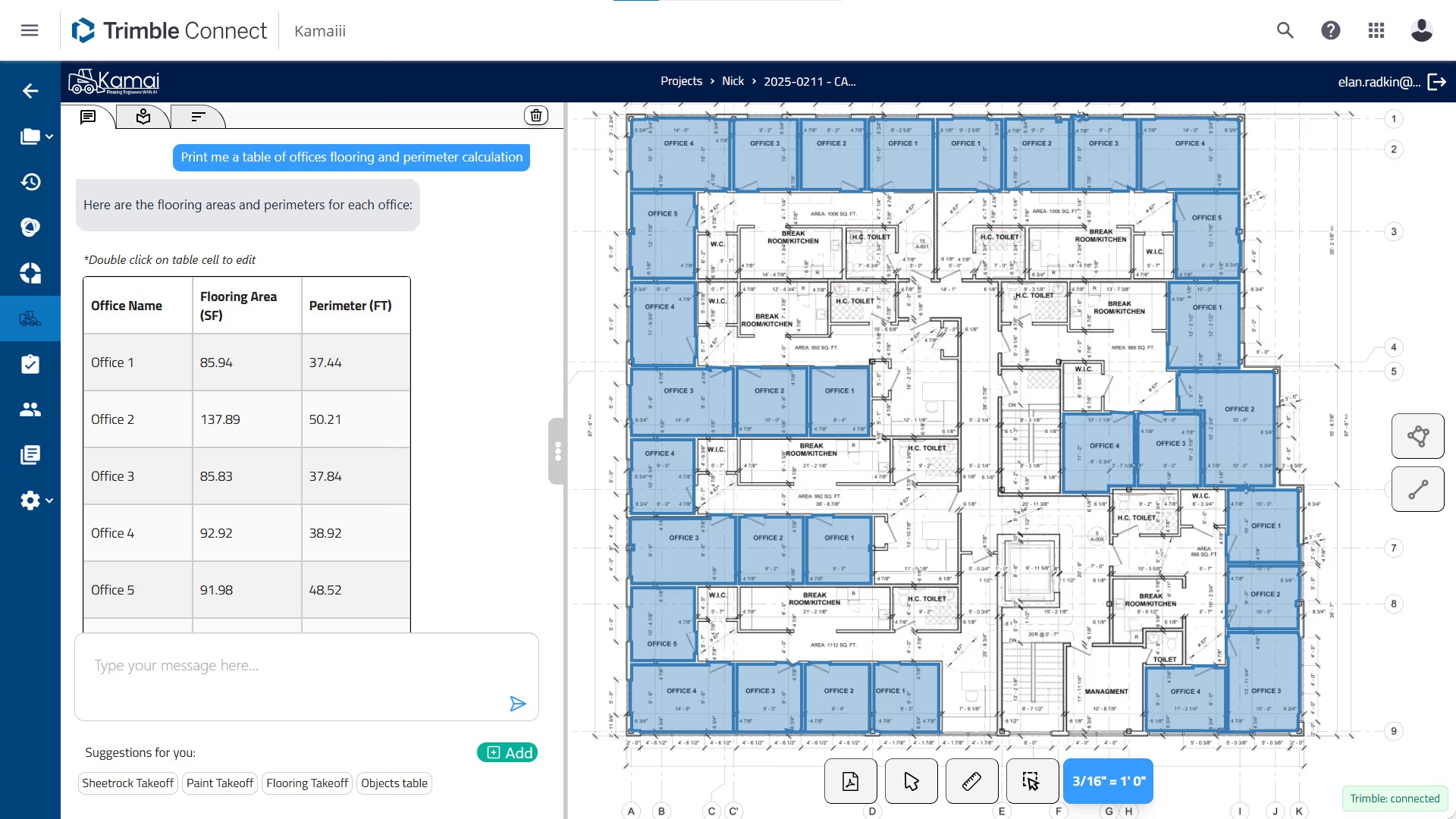
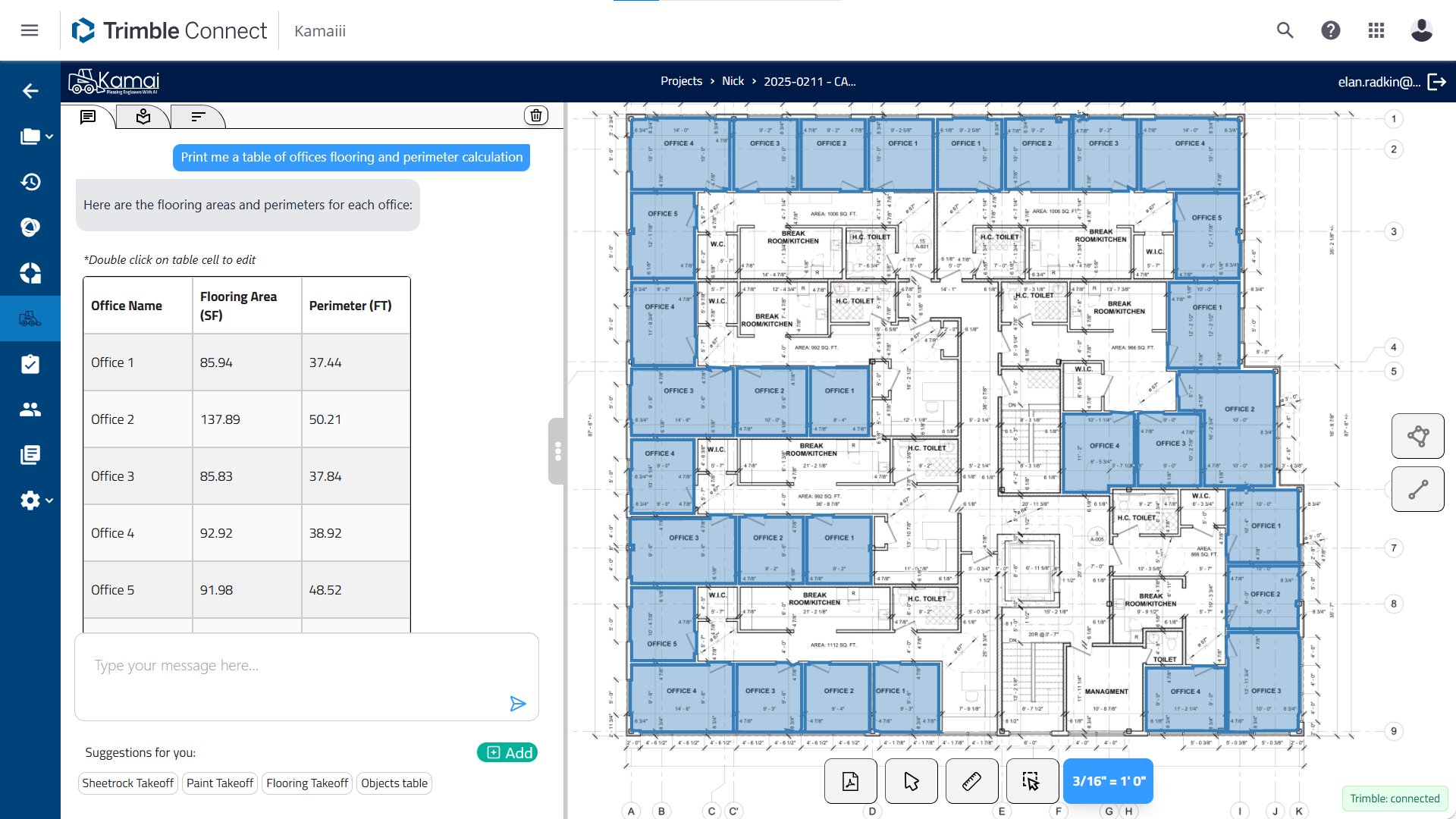
A PDF Takeoff API helps automate the process of extracting quantities and measurements directly from construction drawings. Instead of relying entirely on manual interpretation, AI-powered systems analyze plans digitally and convert them into structured construction data.
This allows teams to overcome many of the challenges associated with traditional estimating workflows.
Automating Quantity Extraction
One of the biggest advantages of a PDF Takeoff API is the ability to automate repetitive measuring tasks.
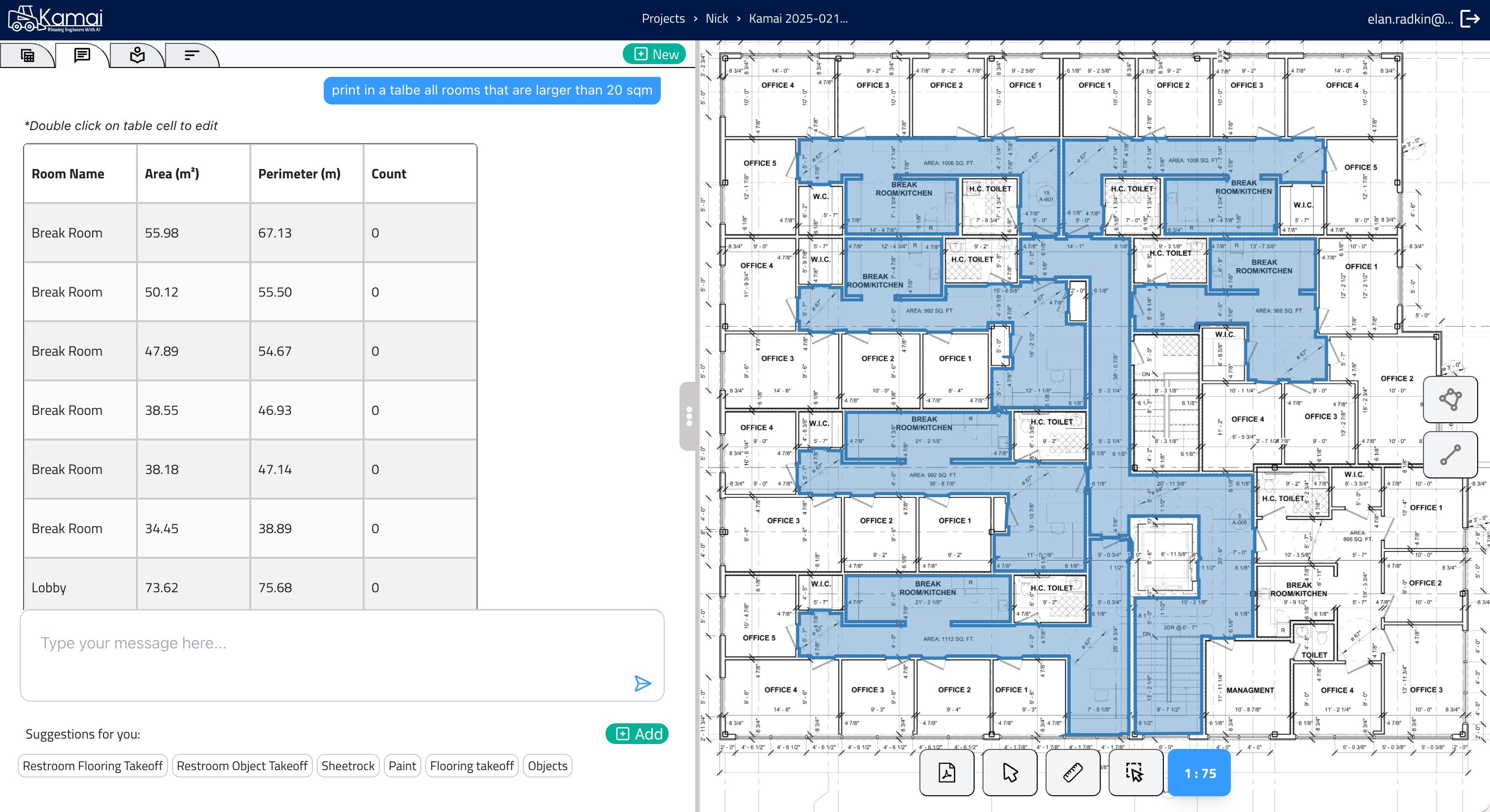
Rather than manually tracing walls or calculating floor areas by hand, the API can automatically identify:
- Areas
- Lengths
- Volumes
- Fixtures
- Rooms
- Material quantities
- MEP components
This significantly reduces the amount of manual work required during preconstruction.
Kamai helps construction teams transform blueprint chaos into structured data by automatically detecting quantities from uploaded PDF plans with speed and precision.
Improving Accuracy with AI
Manual estimation depends heavily on human interpretation. Different estimators may measure drawings differently, leading to inconsistent results across projects.
AI-powered takeoff systems create more standardized workflows by applying the same analysis process to every drawing set. This improves consistency and reduces the variability that often occurs during manual takeoffs.

Kamai’s AI identifies elements, materials, dimensions, and quantities directly from plans, helping teams reduce human error while improving estimate reliability.
Faster Estimating for Competitive Bidding
Construction bidding is highly competitive, and response time matters. Contractors that can prepare accurate estimates faster often gain an advantage in securing projects.
Manual takeoffs can delay the estimating process significantly, especially on large commercial projects with extensive drawing packages.
With a PDF Takeoff API, estimators can upload plans and receive structured quantity data within minutes instead of spending days reviewing drawings manually.
This faster workflow helps teams:
- Submit more bids
- Handle larger projects
- Improve turnaround times
- Reduce estimator workload
- Respond quickly to revisions
Instead of spending valuable time measuring plans, estimators can focus more on pricing strategy and project analysis.
Managing Drawing Revisions More Efficiently
One of the most frustrating aspects of manual estimating is dealing with drawing revisions. Updated sheets often require estimators to repeat measurements and recheck quantities manually.
A structured digital workflow makes revision management much easier.
PDF Takeoff APIs help teams organize project data more effectively while maintaining consistency across updated drawing sets. Automated analysis also helps identify changes faster, reducing the risk of estimating from outdated documents.
Turning Drawings into Actionable Data
Traditional PDF plans are essentially static documents. Valuable project information exists inside the drawings, but manually extracting and organizing that data takes significant effort.
A modern takeoff API transforms these static files into structured construction intelligence.
Once quantities are extracted, teams can use the data for:
- Estimating
- Procurement planning
- Budget forecasting
- Scheduling
- Material tracking
- Scope validation
- Reporting
Kamai enables users to move beyond simple measurements and turn blueprint data into actionable project insights.
Supporting Better Construction Decisions
The ultimate goal of better takeoffs is not just faster measurement. It is better decision-making.
When project teams have reliable quantity data early in the process, they can:
- Compare material options
- Forecast costs more accurately
- Reduce waste
- Improve procurement timing
- Validate project scope
- Plan construction phases more effectively
Structured construction data helps teams operate with more confidence throughout the project lifecycle.
Why Digital Takeoffs Are Becoming Essential
The construction industry is becoming increasingly data-driven. Contractors that continue relying solely on manual workflows may struggle to compete with teams using AI-powered automation.
As labor shortages, material volatility, and project complexity continue increasing, efficient estimating workflows are becoming more important than ever.
Digital takeoff technology allows companies to:
- Improve estimating consistency
- Increase operational efficiency
- Reduce administrative burden
- Scale estimating capacity
- Deliver more competitive bids
For many companies, the transition from manual takeoffs to automated PDF analysis is no longer optional. It is becoming a competitive necessity.
Conclusion
Manual construction estimating comes with significant challenges, from low-quality PDF files and missing scales to revision management and human error. These issues slow down workflows, reduce estimating accuracy, and increase project risk.
A PDF Takeoff API helps overcome these challenges by automating quantity extraction directly from digital construction plans. Instead of spending hours manually measuring drawings, teams can generate structured construction data quickly and accurately.
Kamai helps contractors, estimators, and project managers transform PDF blueprints into intelligent construction insights using AI-powered automation. With faster analysis, improved consistency, and reduced manual effort, construction teams can create more accurate estimates and make better project decisions from the start.