Why Digitizing Quantity Takeoffs Is Transforming Construction

kamai.io
April 23, 2026
6 m

Digitize your quantity takeoffs with Kamai to improve accuracy, speed, and collaboration. Transform construction estimating workflows and boost project efficiency with AI-powered insights.
In today’s fast-paced construction environment, success depends on precision, speed, and the ability to make informed decisions quickly. One of the most impactful changes contractors and estimators can make is digitizing their quantity takeoff process. While it may seem like a small adjustment in the overall workflow, the effects of moving from manual to digital takeoffs extend across every stage of a project from bidding to execution and final delivery.
Quantity takeoffs form the foundation of construction estimating. They determine how much material is required, how costs are calculated, and ultimately whether a project will be profitable. When this process is digitized, it becomes more than just a measurement task it evolves into a powerful system for driving efficiency, accuracy, and growth.
Understanding Quantity Takeoffs in Construction
A quantity takeoff is the process of reviewing construction drawings and specifications to identify and measure all materials required for a project. This includes everything from concrete volumes and steel reinforcement to fixtures, finishes, and mechanical components.
Traditionally, estimators relied on printed drawings, rulers, calculators, and manual notes. Every measurement had to be completed by hand, and every calculation required careful verification. While this method worked for decades, it introduced significant inefficiencies and risks.
Why Accuracy in Takeoffs Matters So Much
Even a small error in a takeoff can create major consequences. Miscalculating material quantities can lead to over-ordering, wasted resources, or under-ordering, which causes delays and emergency purchases. These issues directly affect budgets, timelines, and client satisfaction.
Accurate takeoffs ensure that project estimates are reliable, procurement is efficient, and construction progresses without costly interruptions. This is why improving the takeoff process is one of the most effective ways to strengthen overall project performance.
The Limitations of Manual Takeoff Processes
Manual takeoffs require significant time and effort. Estimators must review each drawing sheet individually, measure dimensions carefully, and repeat the same process for similar spaces. On large projects, this can take days or even weeks.
This time investment limits how many bids a team can prepare, reducing opportunities to win new work. It also creates pressure to rush through estimates, increasing the likelihood of mistakes.
High Risk of Human Error
No matter how experienced an estimator is, manual processes are prone to errors. Misreading a scale, missing a detail, or entering incorrect data can lead to inaccurate estimates. These mistakes often go unnoticed until construction begins, when fixing them becomes far more expensive.
Difficulty Handling Drawing Revisions
Construction drawings frequently change. In a manual workflow, identifying differences between revisions is challenging and time-consuming. Estimators may need to recheck entire plan sets, increasing workload and delaying project timelines.
Lack of Standardization and Consistency
Manual methods vary from one estimator to another. Without standardized workflows, results can differ significantly depending on who performs the takeoff. This inconsistency makes it difficult to maintain quality and reliability across projects.
How Digitizing Takeoffs Changes Everything
Digital takeoff solutions allow estimators to work directly on PDF drawings or digital plans. Measurements can be completed with simple clicks, and quantities are calculated automatically. Tasks that once took hours can now be completed in minutes.
This speed enables teams to respond quickly to bid opportunities and handle more projects without increasing staff.
Improved Accuracy and Reliability
Digital tools reduce the risk of human error by automating calculations and tracking measurements. Once a measurement is recorded, it is stored and can be reviewed at any time. This creates a transparent and reliable process that improves confidence in estimates.
Consistent and Repeatable Processes
Digitizing takeoffs introduces standardization. Estimators can use predefined tools, templates, and workflows to ensure consistency across all projects. This repeatability leads to higher quality results and easier collaboration between team members.
Seamless Data Integration
One of the biggest advantages of digital takeoffs is the ability to transfer data directly into estimating systems. Instead of manually entering quantities into spreadsheets, data flows automatically between tools, reducing duplication and errors.
The Role of Automation in Modern Takeoffs
Automation allows estimators to avoid repeating the same work multiple times. For example, identical rooms or layouts can be measured once and replicated across the project. This dramatically reduces workload and speeds up the process.
Smart Measurement and Detection
Advanced digital tools can identify patterns, shapes, and objects within drawings. Instead of manually counting doors or measuring walls, the system can detect and quantify these elements automatically.
Real-Time Updates and Adjustments
When drawings change, digital systems can quickly update quantities and highlight differences. This ensures that estimates remain accurate and up to date throughout the project lifecycle.
Enhancing Collaboration Across Teams
Digitized takeoff data can be shared across departments, including estimating, procurement, and field teams. Everyone works from the same information, reducing miscommunication and improving coordination.
Improving Communication with Stakeholders
Clear, accurate data makes it easier to communicate with clients, subcontractors, and project managers. Digital reports and visual annotations help ensure that everyone understands the scope and requirements of the project.
Supporting Field Operations
Field teams benefit from having access to precise quantity data. This helps them plan work more effectively, manage materials efficiently, and avoid delays caused by missing information.
Impact on Bidding and Project Profitability
Faster takeoff processes allow contractors to submit more bids within the same timeframe. This increases the chances of winning projects and growing the business.
Improving Bid Accuracy
Accurate quantity data leads to more precise cost estimates. This reduces the risk of underbidding or overbidding, helping contractors maintain profitability while staying competitive.
Reducing Financial Risks
By minimizing errors and improving planning, digital takeoffs help prevent cost overruns, material waste, and project delays. This directly contributes to healthier profit margins.
The Strategic Value of Digitized Takeoffs
Digital takeoff systems do more than calculate quantities they create valuable datasets that can be analyzed and reused. Contractors can compare past projects, identify trends, and improve future estimates.
Supporting Better Decision-Making
With accurate and accessible data, decision-makers can evaluate options more effectively. Whether choosing materials, adjusting budgets, or planning schedules, digital insights provide a strong foundation for strategic planning.
Enabling Scalable Growth
As construction businesses grow, manual processes become a bottleneck. Digitized workflows allow companies to scale operations without sacrificing quality or efficiency.
Getting Started with Digital Takeoffs
Choosing a construction-focused digital takeoff solution is essential. The right platform should support accurate measurements, easy data management, and integration with estimating and project management tools.
Training and Implementation
Transitioning to digital workflows requires training and adaptation. Teams need to understand how to use new tools effectively and incorporate them into existing processes.
Building Standardized Workflows
Establishing consistent procedures for digital takeoffs ensures long-term success. Standardization improves accuracy, simplifies collaboration, and creates a repeatable system that can be applied across projects.
How Kamai Elevates Digital Takeoff Workflows
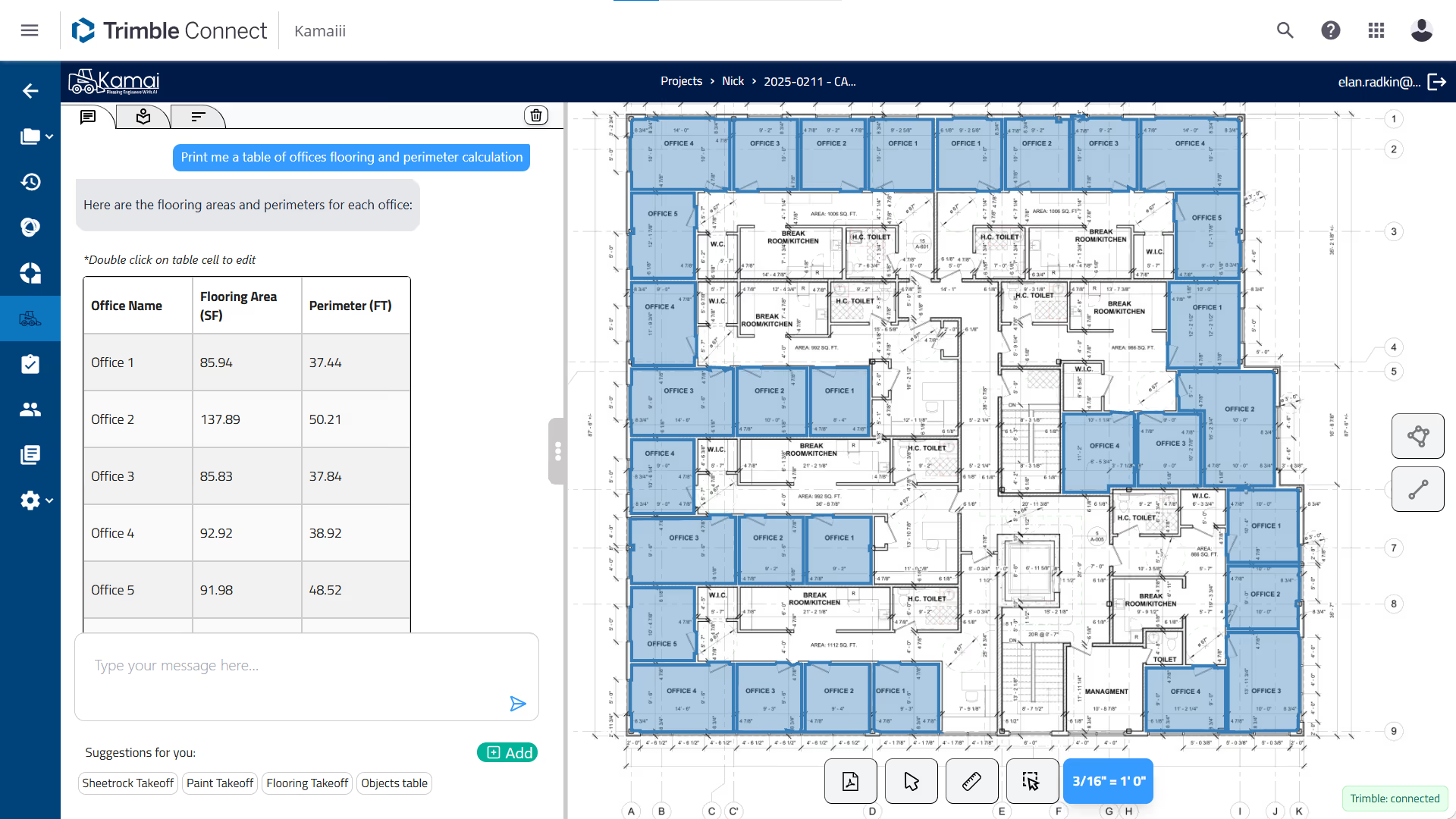
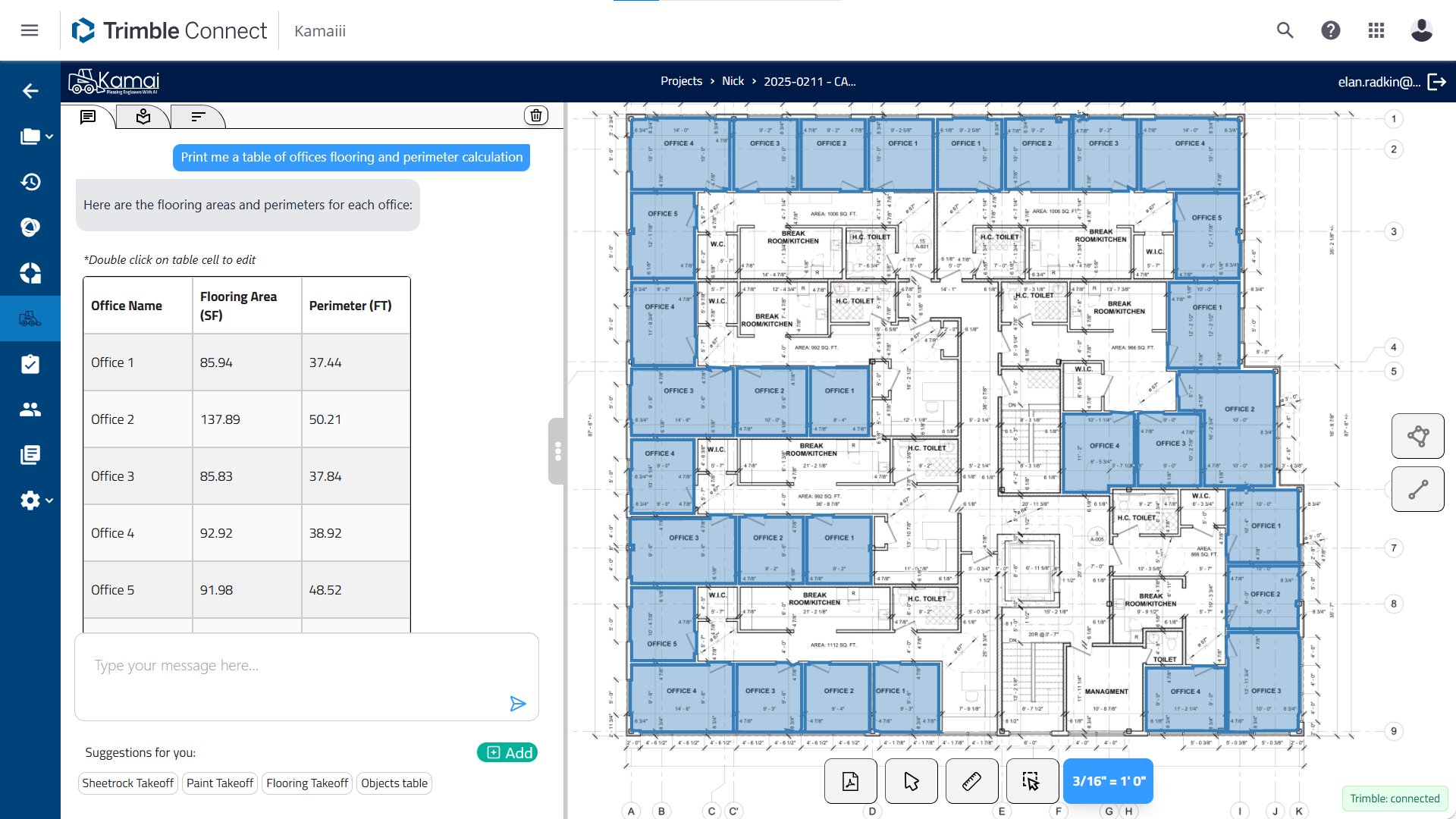
Kamai takes digitized takeoffs to the next level by using advanced AI to extract structured data directly from blueprints. Instead of manually measuring and interpreting drawings, users can upload plans and receive accurate quantities instantly.
Automating the Entire Process
With Kamai, measurements, counts, and calculations are handled automatically. This eliminates manual effort and allows estimators to focus on higher-value tasks such as pricing, planning, and strategy.
Delivering Speed and Precision
Kamai’s technology processes drawings with high accuracy, ensuring that estimates are both fast and reliable. This combination of speed and precision provides a significant competitive advantage.
Enabling Smarter Decisions
By turning blueprint data into structured insights, Kamai helps teams make better decisions throughout the project lifecycle. From bidding to execution, every step is supported by accurate, real-time information.
The Future of Quantity Takeoffs
As technology continues to evolve, takeoff processes will become increasingly automated. AI and machine learning will play a larger role in interpreting drawings and generating estimates.
Integrating with Broader Construction Ecosystems
Digital takeoff systems will continue to integrate with other construction technologies, including project management, procurement, and scheduling platforms. This will create a seamless flow of data across the entire project lifecycle.
Embracing Data-Driven Construction
The future of construction lies in data. Digitized takeoffs are a key step toward building a more data-driven industry, where decisions are based on accurate information rather than assumptions.
Conclusion
Digitizing quantity takeoffs is no longer optional it is essential for construction companies that want to remain competitive. By replacing manual processes with digital tools, contractors can achieve greater accuracy, efficiency, and collaboration.
The benefits extend far beyond the estimating phase, influencing every aspect of a project from planning to completion. With advanced solutions like Kamai, construction professionals can unlock the full potential of their data, streamline workflows, and deliver better results.
In an industry where margins are tight and competition is fierce, the power of digitizing quantity takeoffs lies in its ability to transform how projects are planned, executed, and delivered.