Integrate Takeoff into Estimating Software

April 22, 2026

Integrate takeoff into estimating software with Kamai. Automate blueprint data extraction, improve accuracy, and accelerate construction estimating workflows.
Construction estimating has always depended on one critical step: the takeoff. Before any cost can be calculated, every material, dimension, and component must be measured from project drawings. Traditionally, this process has been separate from estimating software, forcing teams to switch between tools, re-enter data, and manually verify results.
Today, that fragmented workflow is no longer necessary. With Kamai, you can integrate takeoff directly into your estimating software, transforming how construction teams move from drawings to decisions.
The Problem with Disconnected Workflows
In many construction companies, takeoff and estimating still operate as two separate processes. Estimators extract quantities from drawings using one tool, then transfer that data into another system for pricing and cost analysis.
This disconnect creates inefficiencies at every stage. Manual data entry increases the risk of errors, while switching between platforms slows down productivity. Even small inconsistencies between takeoff data and estimates can lead to inaccurate bids, miscommunication, and costly rework.
As projects grow more complex and timelines become tighter, these inefficiencies can significantly impact a company’s ability to compete.
Why Integration Matters in Modern Construction
Integrating takeoff into estimating software eliminates the gap between measurement and decision-making. Instead of treating takeoff as a separate task, it becomes a seamless part of the estimating workflow.
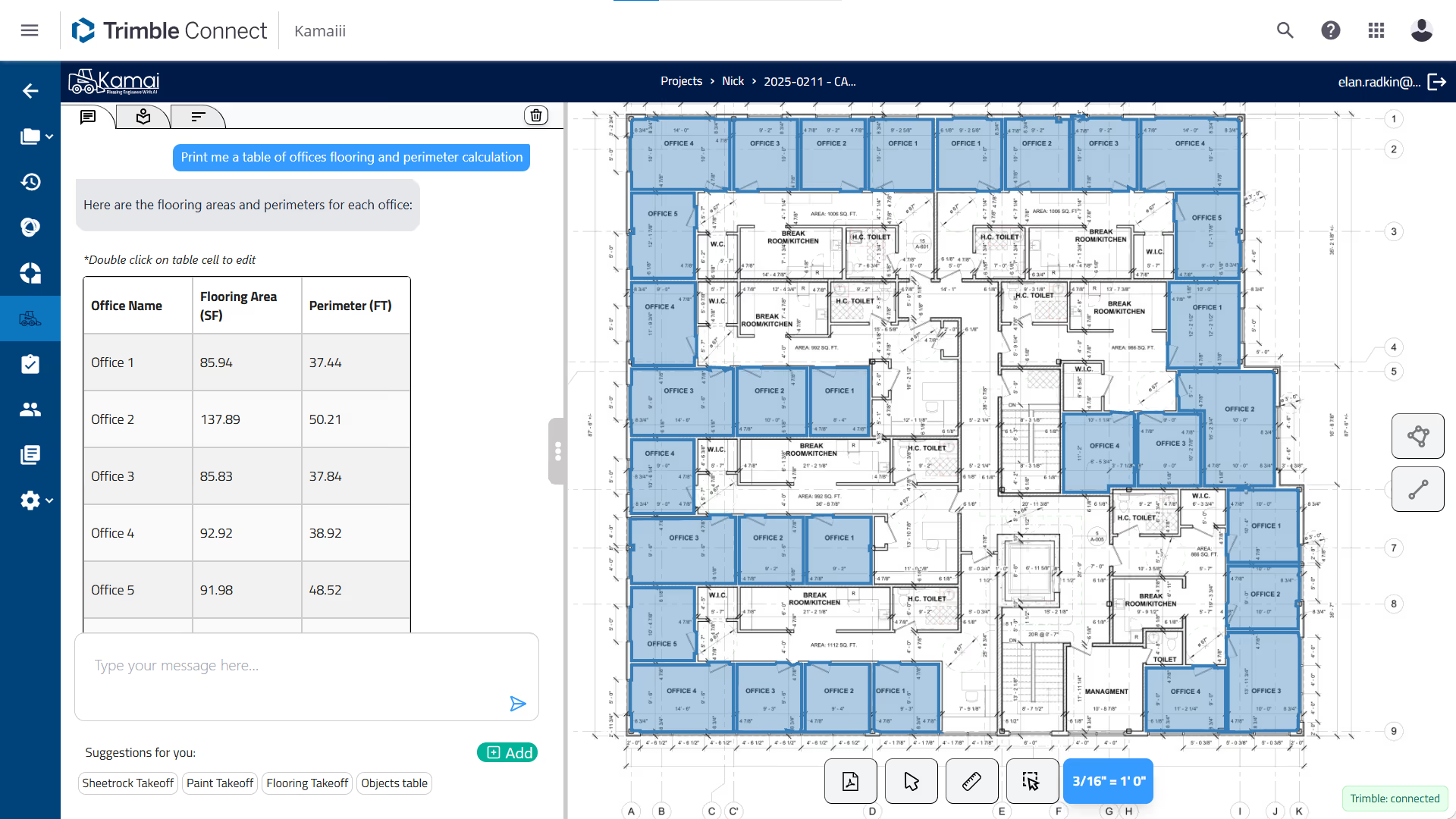
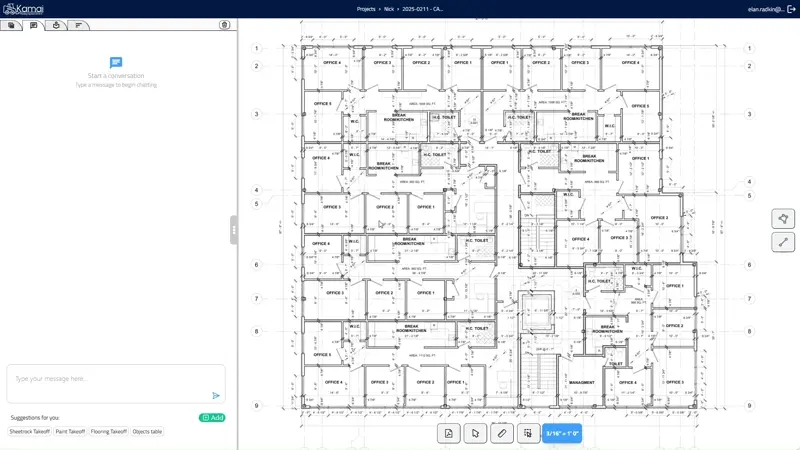
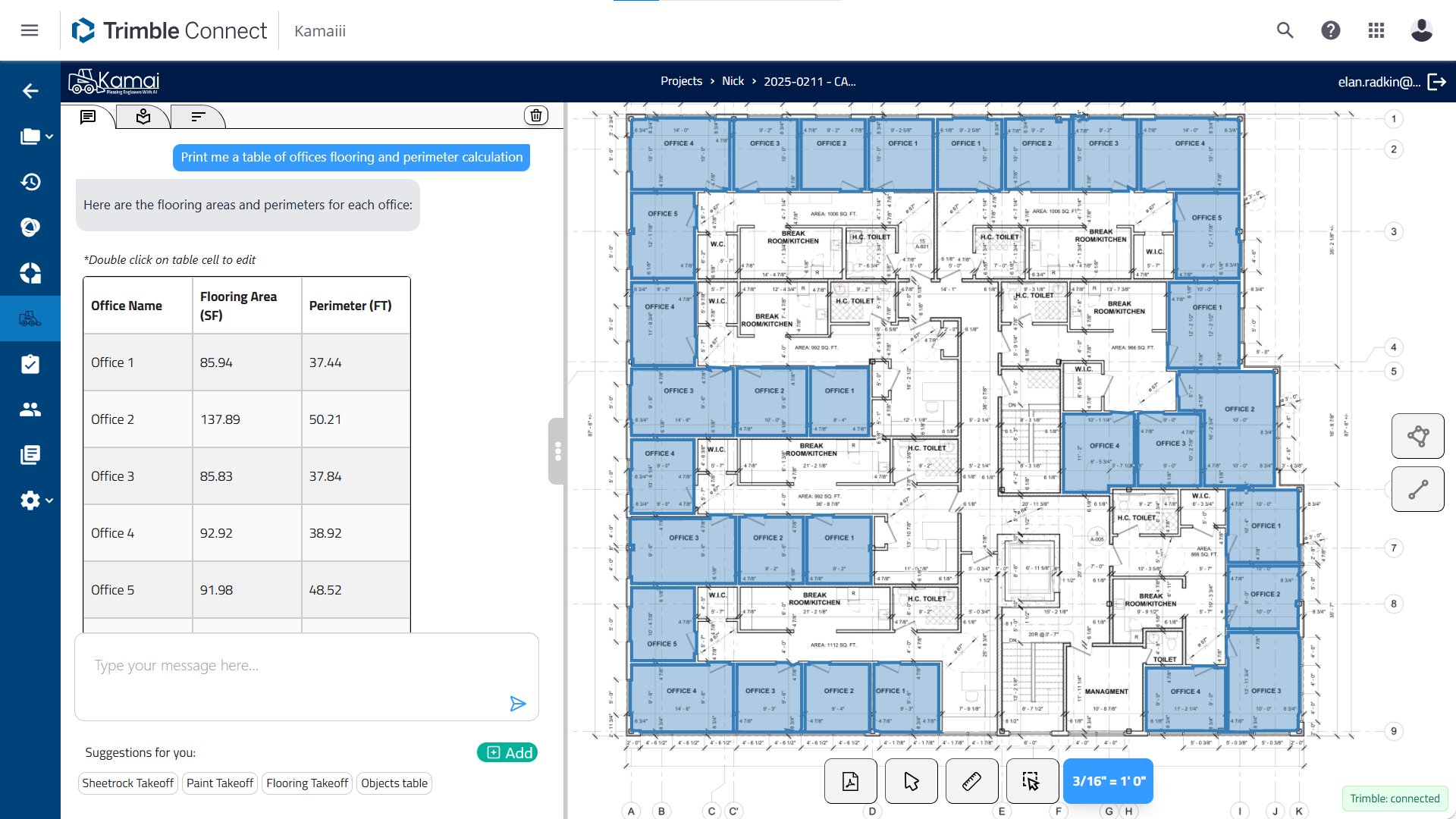
With Kamai, construction teams can upload blueprints, extract quantities, and immediately use that data within their estimating environment. There is no need to duplicate work or manually transfer information.
This integration ensures that all data remains consistent, accurate, and accessible, allowing teams to move faster and make better-informed decisions.
Turning Blueprint Chaos into Structured Data
Construction drawings are rich in information, but they are inherently unstructured. Lines, symbols, and annotations must be interpreted manually before they can be used for estimating.
Kamai changes this by converting blueprint data into structured outputs automatically. Using advanced AI and computer vision, the platform identifies architectural and MEP elements within drawings and transforms them into organized datasets.
This structured data can be directly integrated into estimating systems, enabling teams to analyze quantities, calculate costs, and build estimates without additional processing.
How Kamai’s Takeoff API and Widget Work
Kamai provides flexible integration options through its Takeoff API and embedded widget. These tools allow companies to bring powerful takeoff capabilities directly into their own platforms.
When users upload blueprints, Kamai instantly analyzes the drawings and detects areas, volumes, and materials with high precision. The system calculates every detail automatically, eliminating the need for manual measurement or second guessing.
The extracted data is then delivered in a structured format, ready to be used within the estimating workflow. This seamless connection between takeoff and estimating significantly reduces turnaround time and improves overall efficiency.
From Measurement to Instant Insights
One of the biggest advantages of integrating takeoff into estimating software is the ability to move from raw data to actionable insights instantly.
With Kamai, estimators no longer spend hours measuring drawings. Instead, they can focus on analyzing results, comparing options, and refining bids. The platform acts as an intelligent assistant, providing accurate data and enabling faster decision-making.
This shift allows construction teams to prioritize strategy over manual work, improving both productivity and project outcomes.
Every Detail Automatically Calculated
Accuracy is essential in construction estimating, and even small errors can have significant consequences. Kamai ensures that every detail is calculated automatically and consistently.
From wall areas and floor measurements to material quantities and component counts, the system handles complex calculations with precision. This eliminates the variability associated with manual methods and ensures that all estimates are based on reliable data.
By automating calculations, Kamai reduces the risk of errors and provides a solid foundation for accurate bids.
Enhancing Speed and Productivity
Time is one of the most valuable resources in construction. The faster a team can complete takeoffs and estimates, the more opportunities they can pursue.
Integrating Kamai into estimating software accelerates the entire workflow. Tasks that once required hours or days can now be completed in minutes. This allows teams to respond quickly to bid opportunities and handle a higher volume of projects.
Increased speed does not come at the expense of accuracy. Instead, automation ensures that results are both fast and reliable.
Supporting Better Decision-Making
Accurate data is only valuable if it can be used effectively. By integrating takeoff into estimating software, Kamai ensures that data is immediately available for analysis and decision-making.
Teams can evaluate project scope, identify potential risks, and optimize costs without delay. This real-time visibility allows for more informed decisions and better project planning.
Whether comparing design options or adjusting budgets, having instant access to accurate quantities provides a significant advantage.
Building a Connected Construction Workflow
Modern construction requires seamless collaboration between different teams and systems. Integrating takeoff into estimating software is a key step toward creating a connected workflow.
Kamai enables this by providing a centralized source of truth for all takeoff data. Estimators, project managers, and stakeholders can access the same information, ensuring alignment across the project lifecycle.
This connected approach reduces miscommunication, improves efficiency, and supports better outcomes for every project.
Empowering Growth and Scalability
As construction companies grow, their processes must scale accordingly. Manual workflows and disconnected systems can limit growth by slowing down operations and increasing the risk of errors.
Kamai’s integrated approach allows teams to scale efficiently. By automating takeoffs and connecting them directly to estimating, companies can handle more projects without increasing workload.
This scalability is essential for staying competitive in a fast-paced industry.
From Plans to Intelligence
Integrating takeoff into estimating software transforms how construction teams interact with their data. Instead of working with static drawings, they gain access to dynamic insights that drive better decisions.
Kamai turns plans into intelligence by extracting, structuring, and delivering data in a way that is immediately useful. This transformation enables teams to move faster, reduce risk, and achieve better results.
Conclusion
The construction industry is evolving, and traditional workflows are no longer enough to keep up with modern demands. Integrating takeoff into estimating software is a critical step toward improving efficiency, accuracy, and scalability.
Kamai provides the tools needed to make this transition seamless. With its Takeoff API and embedded widget, it transforms blueprint data into structured insights and connects it directly to the estimating process.
By eliminating manual work and enabling faster, smarter decisions, Kamai helps construction teams stay ahead in an increasingly competitive landscape.