How Construction Estimating Has Advanced Over the Years

March 5, 2026

Discover how construction estimating has evolved from manual calculations to AI-powered software. Learn how modern tools like Kamai improve accuracy, speed, and efficiency in project estimating.
Accurate estimating has always been at the heart of successful construction projects. Whether determining material costs, calculating quantities, or forecasting labour hours, the precision of an estimate can determine whether a project stays within budget and on schedule.
For contractors, developers, and project managers, a reliable estimate is the foundation for winning bids, managing resources, and maintaining profitability. Over the years, however, the methods used to produce these estimates have changed dramatically.
Construction estimating has evolved from manual calculations on paper to highly advanced digital workflows powered by software, cloud platforms, and artificial intelligence. Each technological shift has helped estimators work faster, reduce errors, and manage increasingly complex projects.
Today, modern solutions like Kamai’s digital takeoff and estimating technologies are pushing this evolution even further by transforming how construction professionals extract quantities from drawings and generate accurate cost projections.
The Early Days of Construction Estimating
In the early and mid-20th century, construction estimating was almost entirely manual. Estimators relied on physical drawings, mathematical calculations, and their personal experience to determine project costs.
The process required extreme attention to detail and involved several labor-intensive steps.
Estimators would carefully review architectural and engineering drawings printed on large sheets of paper. Using scale rulers and measuring tools, they would determine distances, areas, and dimensions directly from the plans.
Every quantity had to be calculated by hand. Walls, slabs, pipes, and structural components were measured individually, and material requirements were derived using handwritten formulas.
Symbols representing fixtures such as doors, windows, lighting systems, and plumbing components were counted manually using tally marks or colored highlights. These counts were then transferred into handwritten notes or paper spreadsheets.
Once quantities were gathered, estimators compiled the information into cost breakdowns based on labour rates, material prices, and supplier quotes.
While experienced professionals could produce highly detailed estimates using these techniques, the process had clear limitations.
Manual estimating was extremely time-consuming, especially for large construction projects. A single estimator could only review a limited amount of information at a time, which made estimating complex developments a lengthy process.
Even small mistakes could cause significant issues. Misreading a scale, missing a symbol, or miscalculating a formula could result in incorrect estimates, leading to budget overruns or lost bids.
Large infrastructure projects or industrial developments often required entire teams of estimators working together for weeks to produce accurate budgets.
The Rise of Spreadsheets in the 1980s and 1990s
The introduction of personal computers in the 1980s began to transform the construction estimating process. One of the most influential tools during this period was spreadsheet software.
When Microsoft Excel was released in 1985, it quickly became a powerful tool for organizing and calculating construction data. Instead of relying solely on calculators and handwritten tables, estimators could now use digital spreadsheets to process numbers more efficiently.
Spreadsheets introduced several important advantages to construction estimating.
First, they significantly improved calculation accuracy. Built-in formulas reduced the risk of mathematical errors and allowed estimators to update large datasets quickly.
Second, spreadsheets made it easier to organize cost data. Material quantities, labour rates, supplier quotes, and project totals could all be stored within structured tables that could be easily modified.
Third, spreadsheets improved data management. Estimators could store historical project data, making it easier to reference previous estimates when preparing new bids.
By the late 1980s and early 1990s, spreadsheets had become a standard tool for many construction professionals. Even today, Excel remains widely used in the industry.
Recent studies suggest that a large percentage of construction professionals still rely on spreadsheets for estimating and cost analysis. Their flexibility and familiarity make them a valuable component of many estimating workflows.
However, spreadsheets still relied heavily on manual data entry and did not fully eliminate the time required for measuring drawings and collecting quantities.
The Emergence of Digital Estimating Tools in the 2000s
The early 2000s marked another major turning point in construction estimating with the introduction of specialized estimating software.
Unlike spreadsheets, these platforms were specifically designed to support construction workflows. Many of these early tools included digital takeoff capabilities that allowed estimators to measure quantities directly from digital plan files.
Instead of printing large sets of drawings, estimators could now review blueprints on computer screens and perform measurements using on-screen tools.
Digital estimating platforms introduced several key improvements.
Estimators could measure areas, lengths, and volumes directly on digital drawings, eliminating the need for manual scale rulers.
Historical data could be stored within built-in databases, allowing estimators to reuse cost information from previous projects.
Estimates could be organized into structured project breakdowns, improving clarity and consistency.
Although these tools represented a major advancement, they still had some limitations.
Most early estimating software operated as desktop applications, meaning project data was stored locally on individual computers. This made collaboration more difficult, especially for teams working in different locations.
Additionally, the cost of early estimating platforms could be prohibitive for smaller construction firms.
Despite these challenges, the 2000s firmly established digital estimating tools as an essential part of the construction industry.
The Cloud Revolution in Construction Estimating
The next major evolution in estimating technology arrived in the 2010s with the rise of cloud computing.
Cloud-based software allowed construction professionals to access project data from anywhere using internet-connected devices. This shift dramatically improved collaboration between team members.
Instead of working with isolated files stored on individual computers, teams could now access shared project databases in real time.
Cloud-based estimating platforms introduced several important capabilities.
Multiple users could collaborate on the same estimate simultaneously, allowing estimators, project managers, and contractors to work together more efficiently.
Updates to drawings, quantities, and cost data could be shared instantly across teams, ensuring everyone worked with the most current information.
Project files could be accessed from different locations, enabling remote work and improving coordination between offices and construction sites.
Cloud systems also made it easier to integrate estimating tools with other construction software platforms such as project management systems, scheduling tools, and procurement databases.
As a result, estimating became more connected to the overall project lifecycle.
Industry analysts predict that the global construction estimating software market will continue expanding rapidly in the coming years as companies adopt more advanced digital tools.
AI and Automation: The Next Stage of Estimating
The latest transformation in construction estimating is being driven by artificial intelligence and automation.
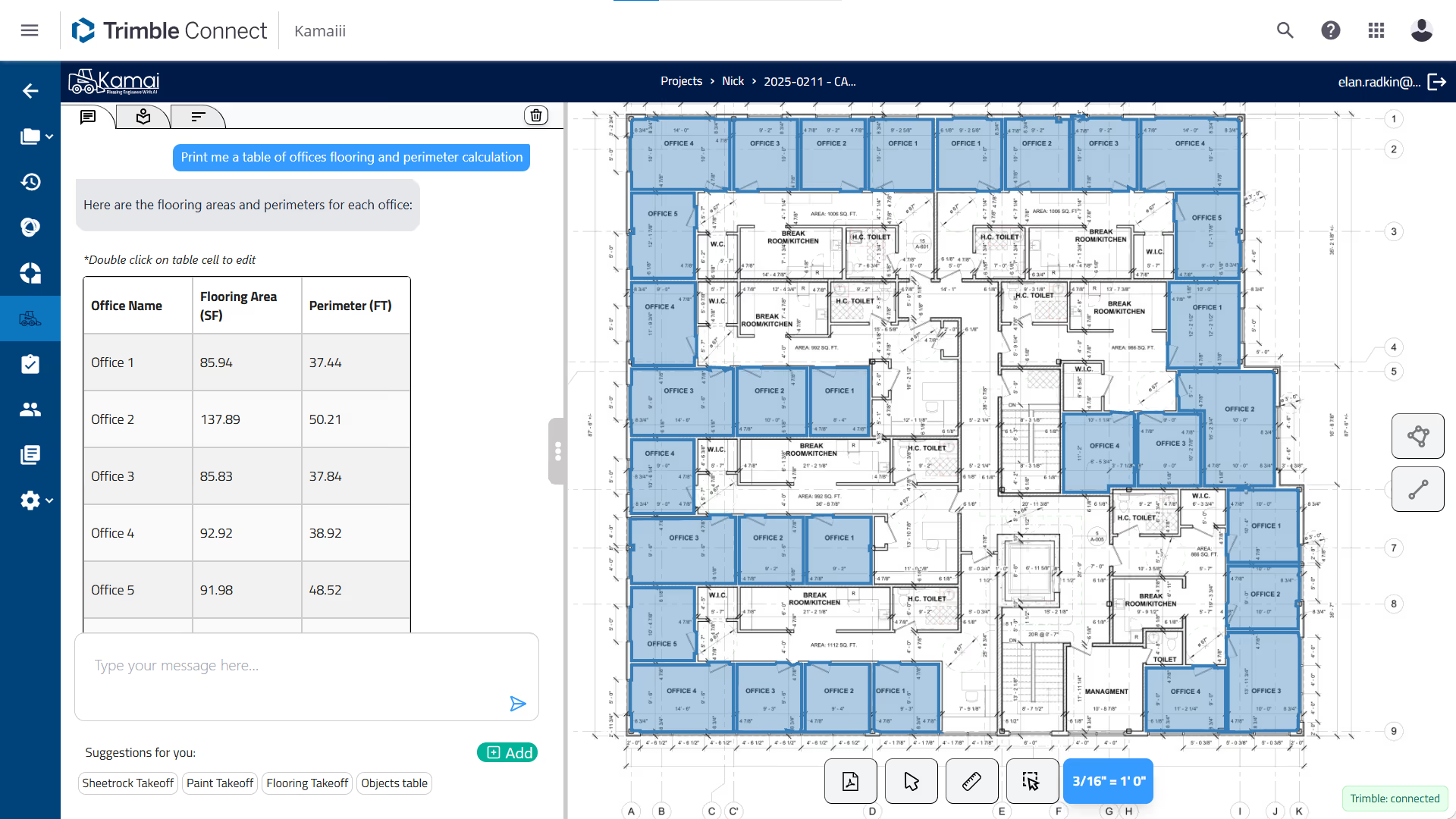
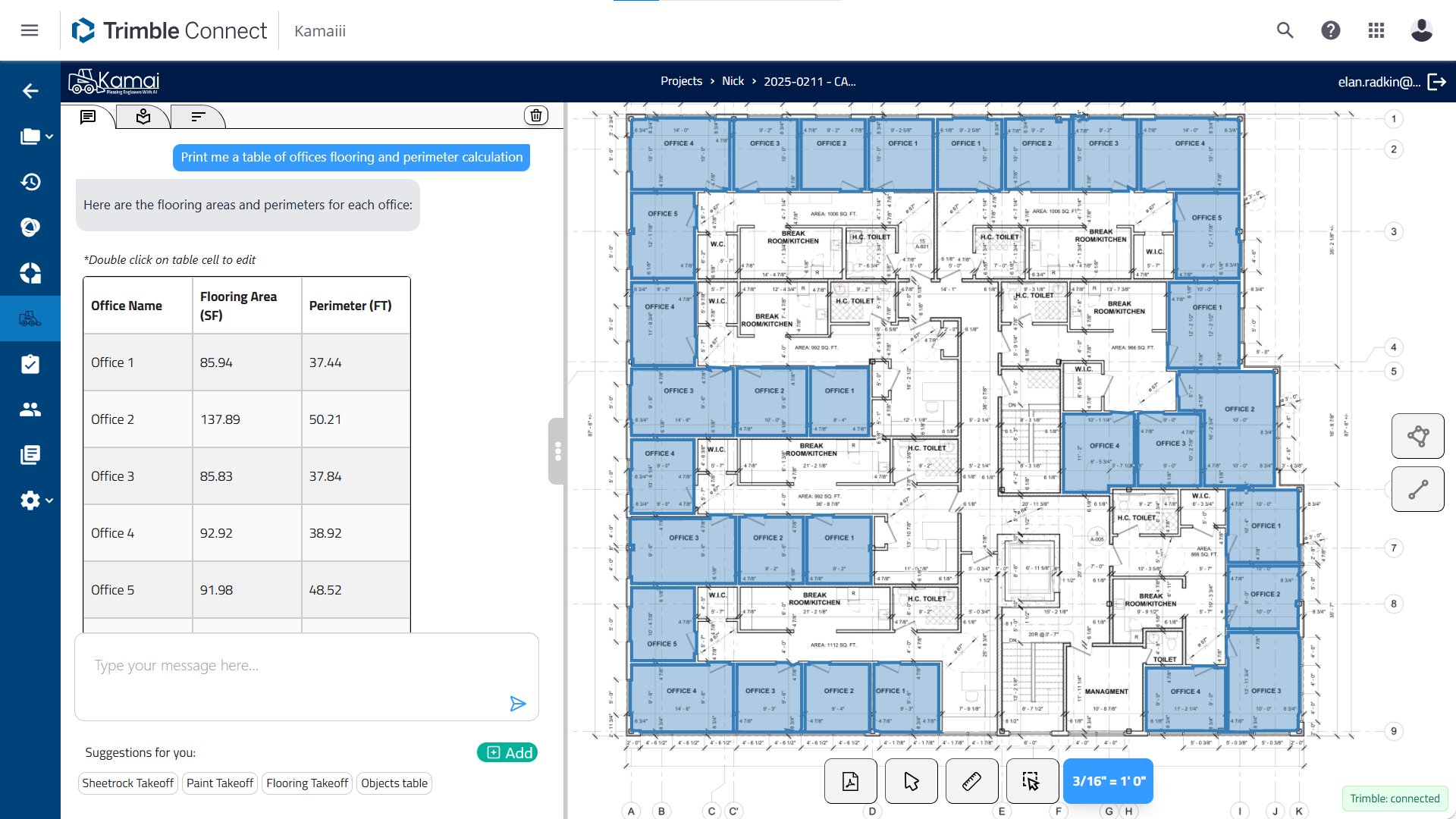
AI-powered systems are capable of analyzing construction drawings, extracting quantities automatically, and generating detailed data that estimators can use to build cost models.
Modern platforms like Kamai are leveraging advanced AI technology to automate complex takeoff tasks and streamline estimating workflows.
Instead of manually measuring every element of a blueprint, AI-powered systems can recognize patterns in construction drawings and identify building components such as walls, floors, structural elements, and mechanical systems.
This automation dramatically reduces the time required to generate quantity data.
AI-driven estimating tools are also introducing new capabilities that extend beyond simple measurement.
Predictive Cost Forecasting
Machine learning algorithms can analyze historical project data to identify trends in labour costs, material pricing, and construction timelines.
This allows estimators to produce more accurate forecasts and anticipate potential cost fluctuations.
Automated Blueprint Interpretation
Advanced AI tools can interpret complex construction drawings and extract quantities automatically.
This reduces manual measurement tasks and helps estimators focus on higher-level project planning.
Risk Detection
AI systems can analyze subcontractor bids and identify anomalies by comparing them to historical data.
This helps contractors detect potential pricing inconsistencies before submitting bids.
Scenario Simulation
Future estimating platforms may allow users to simulate entire construction scenarios, analyzing different procurement strategies or scheduling options to identify the most cost-effective approach.
How Kamai Is Helping Modernize Construction Estimating
Modern estimating platforms like Kamai represent the next generation of construction technology.
Kamai uses advanced AI and digital takeoff solutions to convert complex blueprint drawings into structured quantity data quickly and accurately.
By automating time-consuming takeoff tasks, Kamai helps estimators reduce manual work and focus on strategic decision-making.
This approach improves both speed and accuracy during the estimating process.
Contractors can prepare bids faster, analyze project costs more effectively, and submit more competitive proposals.
For companies looking to scale their operations, digital solutions like Kamai provide the tools needed to handle larger projects without dramatically increasing estimating workloads.
The Changing Role of the Construction Estimator
As estimating technology continues to evolve, the role of the estimator is also changing.
In the past, estimators spent a large portion of their time performing calculations and manually reviewing drawings.
Today, automation is taking over many of these repetitive tasks.
This shift allows estimators to focus on more strategic responsibilities such as analyzing project risks, optimizing construction methods, negotiating supplier pricing, and developing more competitive bids.
Rather than acting solely as number-crunchers, modern estimators are becoming key advisors in the construction planning process.
Their insights help guide project decisions and ensure that budgets align with real-world construction conditions.
The Future of Construction Estimating
The future of construction estimating will likely be defined by deeper integration between artificial intelligence, cloud computing, and construction data platforms.
As these technologies continue to advance, estimating tools will become even more powerful and predictive.
Automated blueprint analysis, real-time cost forecasting, and integrated project analytics will allow construction teams to make smarter decisions earlier in the planning process.
For contractors seeking a competitive edge, adopting advanced estimating technologies will become increasingly important.
Digital platforms like Kamai are already helping construction professionals move beyond traditional estimating methods and embrace faster, smarter workflows.
Conclusion
Construction estimating has undergone a remarkable transformation over the past century. What once required manual calculations and weeks of detailed analysis can now be completed using sophisticated digital tools.
From paper drawings and scale rulers to cloud-based software and AI-driven takeoff platforms, each stage of technological advancement has improved the speed, accuracy, and efficiency of the estimating process.
As the construction industry continues to embrace innovation, modern platforms like Kamai are helping contractors turn complex drawings into reliable data and build more accurate project estimates.
The future of construction estimating will be driven by automation, data intelligence, and integrated digital workflows empowering estimators to deliver smarter and more strategic insights than ever before.