
What are the 4 types of estimating?

kamai.io
June 9, 2026
6 Min
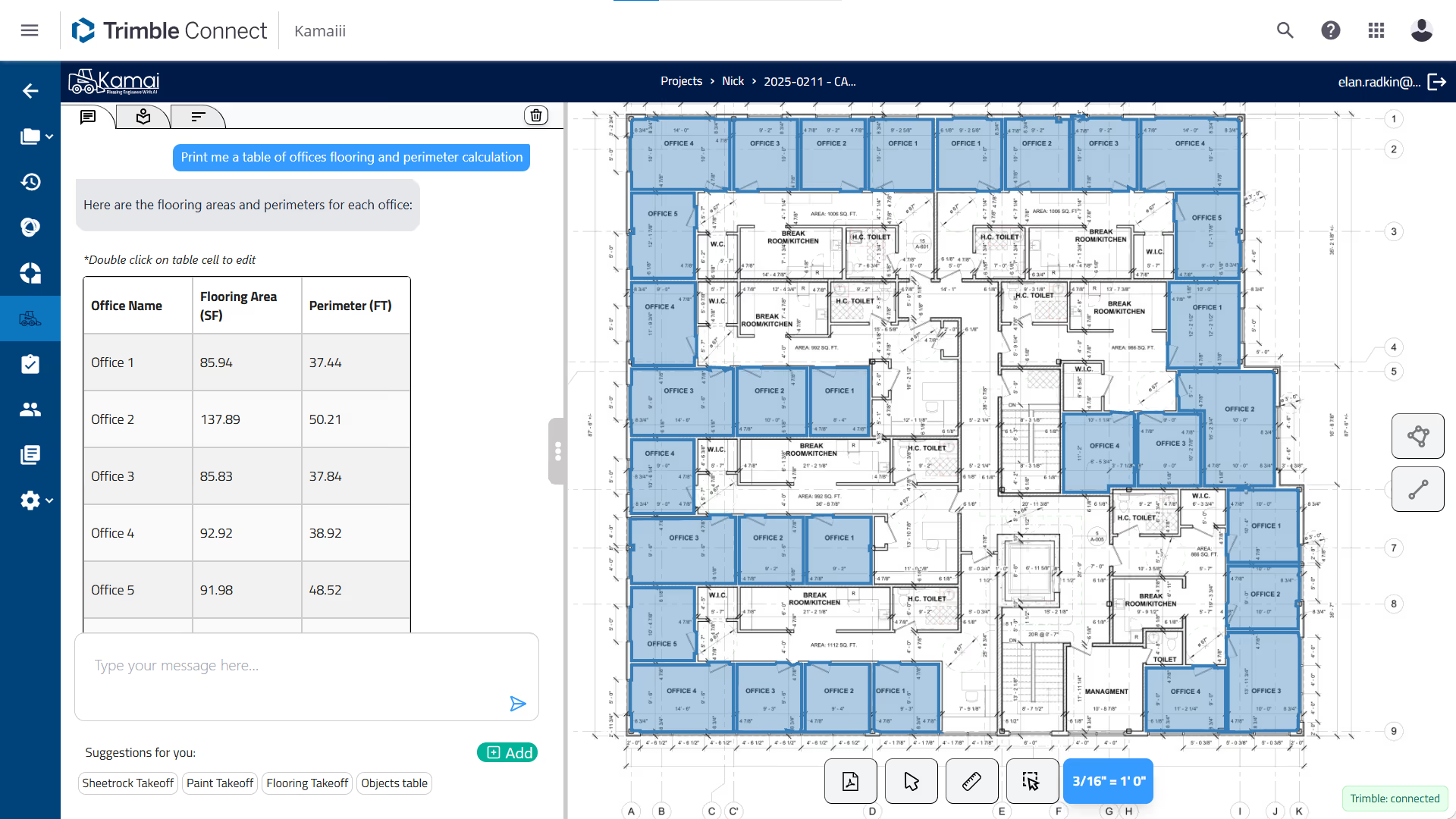
Learn the 4 types of estimating in construction and discover how Kamai's AI-powered blueprint analysis and quantity takeoff technology helps contractors create faster, more accurate estimates.
Construction estimating is one of the most important steps in any building project. Before materials are ordered, labor is scheduled, or budgets are approved, contractors and project managers need a reliable estimate of the work involved. A well-prepared estimate helps companies control costs, submit competitive bids, reduce financial risks, and complete projects successfully.
However, not every estimate serves the same purpose. As a project progresses from concept to execution, different estimating methods are used depending on the amount of information available and the level of accuracy required. Understanding these estimating methods allows contractors, estimators, architects, and developers to make better business decisions.
Today, AI-powered platforms like Kamai are transforming this process by converting 2D blueprints and construction drawings into structured data that supports faster and more accurate estimating workflows.
Understanding the Four Main Types of Estimating
While construction projects vary greatly in size and complexity, most estimates fall into four primary categories:
- Preliminary Estimate
- Detailed Estimate
- Quantity Estimate
- Bid Estimate
Each type plays a different role during the project lifecycle and builds upon the previous stage.
Preliminary Estimate
A Preliminary Estimate is prepared during the earliest stage of a project when only limited information is available. At this point, detailed drawings may not exist, but owners and developers still need an approximate budget to determine whether a project is financially feasible.
Instead of calculating every material and labor requirement, this estimate relies on historical data, industry benchmarks, conceptual designs, and similar completed projects.
For example, a developer planning a commercial office building may want an initial estimate before investing heavily in design and engineering. The preliminary estimate provides a realistic cost range that helps determine whether to move forward.
Although this estimate is less precise than later estimates, it serves several important purposes:
- Supports early budgeting decisions
- Assists feasibility studies
- Helps secure financing or investment
- Guides initial planning discussions
Due to the limited information available, preliminary estimates should be viewed as planning tools rather than final budgets.
Detailed Estimate
As the project design becomes more complete, estimators prepare a Detailed Estimate. This is one of the most accurate forms of estimating because it uses comprehensive project documentation, specifications, and construction drawings.
A detailed estimate considers:
- Material quantities
- Labor requirements
- Equipment costs
- Subcontractor expenses
- Site conditions
- Overhead costs
- Contingencies
This estimate becomes the financial foundation for project execution and internal budgeting.
Producing a detailed estimate manually can be extremely time-consuming, particularly when reviewing hundreds of blueprint pages. Modern AI solutions such as Kamai simplify this process by automatically interpreting construction drawings and extracting measurable project information directly from PDFs and technical plans.
The result is a faster estimating workflow with greater consistency and fewer manual errors.
Quantity Estimate
A Quantity Estimate focuses specifically on measuring the amount of work shown in construction drawings. Instead of determining total project cost, it answers one essential question:
How much material and work is required?
Typical quantity measurements include:
- Floor areas
- Wall lengths
- Concrete volumes
- Roof areas
- Paintable surfaces
- Door and window counts
- Electrical fixtures
- Plumbing components
- Mechanical equipment
Every construction estimate begins with reliable quantities. If measurements are incorrect, the pricing that follows will also be inaccurate.
Traditionally, estimators used printed drawings, scale rulers, calculators, and spreadsheets to complete quantity takeoffs. While effective, this approach required significant time and increased the possibility of human error.
Kamai modernizes this workflow by allowing users to upload blueprint files and automatically extract dimensions, areas, objects, and material quantities. Instead of manually tracing every room or wall, contractors receive structured construction data that can immediately support estimating activities.
Bid Estimate
Once quantities and project costs have been established, contractors prepare a Bid Estimate for submission to the client.
Unlike previous estimate types, the bid estimate combines technical calculations with business strategy. It includes:
- Material costs
- Labor costs
- Equipment expenses
- Subcontractor pricing
- Overhead allocation
- Profit margins
- Risk considerations
The objective is to produce a proposal that is competitive while remaining profitable.
Submitting an unrealistically low bid may win the project but create financial losses later. Conversely, an overly conservative bid may result in losing the contract altogether.
This is why accurate quantity takeoffs and structured estimating data are critical before preparing any bid.
How AI Is Changing Modern Estimating
Construction projects generate enormous amounts of information through drawings, specifications, revisions, and technical documents. Manual interpretation consumes valuable time and often introduces inconsistencies.

Kamai addresses these challenges by transforming blueprint analysis into an AI-driven workflow.
Instead of spending hours measuring plans manually, users can upload construction drawings and allow the platform to process the information automatically.
Kamai helps construction teams by:
- Extracting quantities directly from PDF plans
- Identifying areas, dimensions, and materials automatically
- Structuring blueprint data for estimating workflows
- Reducing repetitive manual measurements
- Supporting faster project analysis
- Improving consistency across multiple drawing sets
This allows estimators to spend less time collecting measurements and more time evaluating project costs and making informed decisions.
Why Choosing the Right Estimating Method Matters
Each estimating type serves a different business purpose.
A preliminary estimate supports early planning, while a detailed estimate provides budgeting accuracy. Quantity estimates establish measurable work, and bid estimates transform that information into a competitive proposal.
Selecting the appropriate estimating method helps organizations:
- Improve budget planning
- Reduce estimating errors
- Increase bidding confidence
- Better manage resources
- Minimize costly revisions
- Deliver more predictable project outcomes
For growing contractors and construction technology teams, combining these estimating methods with AI-powered automation creates a significant competitive advantage.
Kamai: Bringing Intelligence to Construction Estimating
Kamai is designed to transform static 2D blueprints into structured construction intelligence. Using advanced AI and computer vision, it understands architectural and technical drawings beyond simple text recognition.
Users can upload plans and quickly obtain information about quantities, areas, dimensions, and materials without relying on manual measurements.
Key advantages include:
- Automatic quantity extraction from blueprints
- Intelligent analysis of PDF construction drawings
- Faster estimation workflows
- Improved data consistency
- Better decision-making through structured project information
By reducing repetitive tasks and accelerating blueprint analysis, Kamai helps contractors, estimators, architects, and developers prepare more accurate estimates while saving valuable time.
Final Thoughts
The four types of estimating Preliminary Estimate, Detailed Estimate, Quantity Estimate, and Bid Estimate each play a vital role in successful construction planning. Together, they create the foundation for budgeting, procurement, scheduling, and competitive bidding.
As construction projects become increasingly complex, relying solely on manual measurement methods is becoming less practical. AI-powered solutions like Kamai help bridge the gap by transforming drawings into structured, actionable data that supports faster and more reliable estimating.
Organizations that combine strong estimating practices with intelligent automation can improve accuracy, increase productivity, and position themselves for greater success in today's competitive construction industry.


